Today we chatted with bestselling speculative author and fellow podcastor Sunyi Dean! Join us as we dive into conversations about publishing, The Girl With a Thousand Faces, and ghost stories, both the ones we write, and the ones we’ve experienced!
Links:
The Girl With a Thousand Faces
The Emotional Craft of Writing Fiction
Transcript
Sonido
::Thing, which like we all do sometimes. Like, we got to do it. You got to, you know, everyone has to poop.
Jonny
::Everyone has to poop.
Sonido
::So, yeah.
Jonny
::Hello and welcome to the Bidi Bidi Book Pod, a bookish podcast committed to celebrating queer and trans BIPOC stories and storytellers and sharing our experiences within the publishing industry and what it is to exist as a queer trans BIPOC creative today.
novels and romances including:Sonido
::And my name is Sonido Reyes, bestselling and award winning author of The Lesbiana’s Guide to Catholic School, the Luis Ortega Survival Club, The Broposal, the Golden Boy’s Guide to Bipolar, and the forthcoming To Our Untamed Core.
And together we’re so excited to spend some time with you, with friends and in community to chat chismear and make that TBR pile bigger and more diverse. Today we’re joined by Sunyi Dean, best selling speculative author and fellow podcaster.
Her most recent release, the Girl with a Thousand Faces, came out on May 5th.
Today we talked about the horrors of the sophomore novel, inspiration for the book, the craft of the reader’s journey, engaging with and about publishing as podcasters and ghost stories.
Jonny
::Before we bring Suny in, let’s start with a platica, a moment to catch up with each other and with y’all, bring you into our lives as authors and what we’re working on and maybe overshare a little bit. So Soni, what’s going on with you? What are you working on? What are you doing? What is that sound outside my window?
Sonido
::I heard that. I am suffering as usual.
You know, I, I’m in the process of trying to get an SMI designation, which is serious mental illness designation for legal purposes. Like, to make sure that I have like, more like accommodations I need and stuff.
And because, and I think this is like the solution to like, basically every time I try to find a new therapist or a psychiatrist or something, I get rejected a lot because they’re like, oh, well, you need more support than I can give you, so you. So no, actually I won’t help you at all. And it wasn’t until I went to this new psychiatrist recently that he was like, you need more support, but. And I can’t give it to you, but like, here’s where you can get it. And that was the first time that I was like, recommended to like, like given a referral for the smi.
SMI designation, which is wild because I’ve been inpatient multiple times and stuff. And, no one’s, like, it’s never even, like.
Like, it’s come up and stuff, like, in the sense of, like, mentioned, but I didn’t even know, like, the details of, like, how to get it. I didn’t know, like, it’s just basically like, well, just, you know, throw you to the wolves kind of thing. So that’s what I’m dealing with.
Hopefully I can. I don’t know, it’s just, like, complicated to try to, like, even just making the call to set an appointment.
I’m, like, in at that point right now with my mental stability that I’m like, a phone call. I have to make a phone call? I would rather just.
Jonny
::Sometimes it’s like that.
Sonido
::Yeah, yeah, like, so, yeah, I may have to make a phone call today, which is wild because like. We’re doing, like, a podcast episode, and I’m fine talking to, like, my friends and stuff, but a phone call? You want me to do a phone call?
Jonny
::I don’t know what it was. Sometimes even, like, a video chat, I find easier to do than a phone call.
Something about a phone call just does not spiritually resonate with me as a person.
Sonido
::It’s like, I can do phone calls with, like, people I know, but, like, when it’s to do with, like, setting an appointment or, like, figuring out, like, anything that I’m, like, I am going to get in trouble. I don’t know. I don’t.
And I don’t know why I feel like I’m going to get in trouble when I make a phone call, but I do feel like I’m going to get in trouble, and I think that’s why I hate phone calls. I don’t know. But. Yeah. What about you?
Jonny
::Yeah, you know, for some reason, like, putting my phone on speaker helps me not hate phone calls as much as I usually do. I don’t know what that. I don’t know how to explain that.
But, yeah, besides that, I, you know, like, I. I was reflecting on how, like, one of my goals, I think, for life, like, this podcast was, like, to help me maybe get back into, like, reading.
And I was, like, looking at my storygraph, and I was realizing that I read, like, three books in the span of, like, three weeks recently, and I was like, oh, my gosh. Like, I’m. I’m, like, actually reading and I’m enjoying what I’m reading.
And, like, I think I’m almost done with, like, my seventh book of the year, which is a lot for like recently. Yeah. And then I, after I finish this book, I am going to move on to Espiritu Aiden, our friend Aiden. Yeah. I am so excited to get to that.
Sonido
::It’s so good. You’ll love it.
Jonny
::Yeah. Our other mutual friend Amparo Ortiz is also reading it right now.
So I’m like, okay, I need to finish up reading this book I’m currently on so we can read this together and plague the group chat we have with our thoughts about it.
Sonido
::Excellent. Yeah, it’s really good.
Jonny
::Yeah. I’m very excited. So, yeah, perfect. Cut. And now we are honored to introduce the absolute icon that is Sunyi Dean. Thank you so much for joining us.
So happy to have you here.
Sonido
::The legend.
Sunyi
::Thank you for having me. I love the headband, by the way.
Jonny
::Thank you.
Sonido
::Jonny’s staple headband.
Jonny
::Yeah. Yeah. Makes it easy for people to find me. Incredible.
Sonido
::Yes, yes. If you, if you don’t know, Jonny always wears a headband. For any listeners.
Jonny
::Yeah.
Sonido
::Who, who have me or like, if you’re ever at an event Jonny’s at, like, look for the headband. It will always be, yeah, that’s Jonny headband and bun.
Jonny
::But for anyone who might be meeting you for the first time today, can you tell us a little bit about yourself?
Sunyi
::So I’m Sunyi Dean. I like to say I’m a multi award losing author, but I think my publicist kind of hates that.
But yeah, multi award losing author of The Book Eaters and soon to be Girl With a Thousand Faces. Kind of a slow writer.
I was born in Texas, I grew up mostly in Hong Kong and I now live in England where I’ve lived here for 20 years because I’m old. So.
Jonny
::Incredible. And we are really excited to. To be able to pick your brain a little bit about the Girl With a Thousand Faces.
Before we like dive too deep into it, can you give our listeners a brief pitch about what the book is about?
Sunyi
::n Hong Kong and your first in:It was at one point the most crowded place on planet Earth. And it follows Mercy Chan, who’s a kind of ghost talker. You know, she, she’s like an exorcist, but a little bit more gentle and she works for the. The triad gangs who run Kowloon Walled City.
years prior, in the:And obviously this is, like, a brilliant idea. Nothing goes wrong with this plan. It’s all fine. And they just hang out on the beach.
Sonido
::Of course.
Jonny
::Absolutely.
Sonido
::Sounds like dream vacation.
Jonny
::Yeah, I would. I. I love 100. Yeah, 100 pages long beach episode as a book. Like, I. I’m very here for that.
Sunyi
::Completely friendly ghosts and everything’s fine. These stories do. Interestingly.
Sonido
::Yes. I do love a dual timeline. Like.
Jonny
::Yeah. And I. I think for, like, specific.
I just love, like, authors writing in, like, the speculative space, the urban fantasy space, and especially when authors, like, use place so specifically. So I’d like to hear, like, any sort of, like, inspiration you had behind this story or what drove you to telling this story.
Sunyi
::So I guess the first inspiration is I kind of. When Book Eaters was through edits, my editor came to me and was like, so, you know, what’s next? And.
And I talked over some ideas I had, and she said, well, I want you to try and think of something completely new that you’ve not done before. Because I think that most of the things I brought to her were like, oh, these are projects I tried to work on, and they didn’t go anywhere.
And I kind of wanted to do something about Hong Kong. Since Book Eaters is like, my tribute to England, I wanted to do one that was like, a tribute to Hong Kong and the history and the family there.
And also I think a lot of the war history, which is, at least in the uk, people are not, like very aware of it. Like, you’ll study World War II, like, four times in high school here, but you only learn.
Sonido
::A very specific part of World War II. Yeah.
Sunyi
::Yeah. And I think, in fact, one of the.
When I first came to the UK and I was at university, I remember having this conversation about World War II with one of my flatmates. And I mentioned China. And he was like, was China even in World War II? And I was like, uh. Yeah. Yeah, it was. But he had no idea.
He’d never heard of any of the events in it or like the 22 million people that died or all that stuff.
Sonido
::Yeah.
Sunyi
::So I thought it’d be nice to explore that because we, we did study that in Hong Kong as well as like having to study the American, British side of it.
Sonido
::Right, right. And that kind of like ties in exactly to like my first question, which is I feel like us as like BIPOC authors, like we’re often.
Or even any marginalized author, like we’re pretty used to hearing like, oh, this has been done before, like whether it’s like vampires coming out stories, stories set during World War II, like, and usually like we hear that just when we’re getting a chance to like dip our toes into like our versions of those kinds of stories. Like, nothing is like overdone or like dead until everyone’s gotten their chance to like tell their version of it.
So because like I’ve read, I’ve heard of a lot of World War II books. Never read one set in Hong Kong before, like in that specific experience of it. And I’m sure most people can say the same.
It’s not the one that we’re all taught about. Right. So can you talk a little bit about your decision to set the book when and where you did? You talked a little bit about it, but.
And then also how like the speculative elements and the speculative twist adds to the setting specifically.
Sunyi
::Yes. I mean, there are a few books now coming out, I think like Emma Pei Yin wrote When Sleeping Women Wake. That’s just straight historical.
That’s not speculative. There’s a few and there’s like, I can’t remember the title of it now.
There’s one that was set in Malaysia, that was by Tan Yi Wong and there’s a few around like that. But yeah, it’s still definitely underrepresented compared to how many novels we have about World War 11.
And in terms of, I guess, setting in place, I think it’s a really interesting city. It has a lot of history. It has like a really complicated colonial history, a really complicated, complicated history with China.
It’s still a really complicated place, I think. And time wise, I think it’s. It felt very connected because it was like something that my grandmother lived through. She kind of.
She came from rural China from like a village that was just incredibly impoverished. Like some, if you imagine like a place where all the farmers share a pair of oxen because they don’t like have their own kind of thing.
It’s like that level of poverty. And she never learned to read or write. But she moved Hong Kong thinking that she would avoid the war.
And that didn’t happen because the war just came south. So she lived through the Japanese occupation and there’s a.
And like, because she can’t read or write, you know, she’s never written about her experiences. There was never like any opportunity for that. A lot of the people who were alive at that time, you know, they don’t necessarily have their say.
I think, I think part of reason why we have so many books about World War II that are, you know, from a Western perspective is those are the people that have access to education and publishing and to kind of get that out there.
So I’m interested in like, the people whose stories go a little bit untold because, you know, the, the women in this, this book, they’re not like, it’s not a big heroic kind of D Day story about people making game changing things in the war. They’re not, you know, the ones choosing to drop the bombs or move armies. They’re just people who have to kind of survive it.
And that side of it interests me as well, I guess.
Sonido
::Right.
And I feel like that’s like, that’s the vast majority of people who experience war is, is not the soldiers, not the commanders, not the people dropping bombs, but the everyday people, like the civilians and the people who are most impacted by it. So I feel like that’s. It’s such a shame that those are the stories that we get less of. But I also wanted to ask you a question about.
w The Book Eaters came out in:Sunyi
::Yeah.
Sonido
::Okay, awesome. Congrats. That’s awesome.
And it like popped off in:We’re recording this a little early, before the book actually comes out, but even up until now from like the publishing side of things, where it comes to their expectations and their treatment and then also on like the reader side, like with hype and excitement and stuff. Like, what has. How has the reality been, like, similar and different from like your assumptions?
Sunyi
::There’s definitely a big drop between buzzy debut and your sophomore book. You know, the debut buzz disappears and there’s a kind of perfunctoriness to things. I think it can be a bit, a little bit surprising.
You know, it was a gap. My entire team has changed on both sides. My Original editors on both sides are gone.
I went through multiple editors in the UK side, so it is really different. You have to kind of find your feet.
You’re working with people who didn’t necessarily, like, choose you the first time, which was an issue, I think, you know, one of the editors I had on the UK side is now gone. It’s just, like, not.
Sonido
::Oh, no.
Sunyi
::Like, they were a lovely person, actually. Like, we got on, like, a personal level, but just the working relationship was like, they did not get any of the writing.
But, I mean, they’re only here. They were only there for, like, a year, and then they moved on. But, yeah, it was very different.
That said, I think when things started to get into motion, I’m not just saying this out of fear of Tor listening. I think Tor actually pretty good at sticking with it throughout. They kind of, you know, they’re always like, oh, yeah, we. We should always do arcs.
It’s crazy when publishers don’t do arcs. Remember that Tor said that next time someone tells you. Right.
Sonido
::Oh, my gosh. They do like to tell different people different things. By they, I mean publishing. Not any specific publisher, but yeah.
Sunyi
::Yeah. My favorite. My favorite one in the moment is when they’re like, oh, no, for environmental reasons, we’re not doing arcs. And you’re like, okay.
Sonido
::Yeah, we don’t do this. And it’s like, you did. You do, though.
Sunyi
::So if someone. If. If the demand was there and readers wanted to buy, like, 500,000 copies of the book, would you really be like, oh, no, we can’t print that many?
Because the environment. Of course they would. Of course.
Sonido
::Yeah. I mean, big, big corporations, how much do they care about the environment? Like, let’s be real. I don’t know. That. That.
Sunyi
::Yeah, that’s one of my. My. That’s one of the. The kind of fibs I find the funniest. But, yeah, so they. They did do ARCs. They did support it. It was less buzzy.
I think it’s a quieter book. It’s a lot slower, but it perhaps kind of finds its audience a little bit easier. Yeah, it is different. And you learn all these weird things.
Like, I learned, for example, that the. In the industry, people like books about books like that. That’s. So, for example. Well, Book Eaters is about books.
Or the Booksellers of Bath by Garth Nix is about books. The Book Adores by Gareth Brown is about books. And industry people, including, like, booksellers and people like that, they love books about books.
Because that’s.
Sonido
::Oh, that’s so interesting. Yeah.
Jonny
::The meta of it all.
Sonido
::Yeah.
Sunyi
::Yeah. So they work harder on selling those because they are interested in it. So that’s just a random like thing. Yeah. I didn’t even know that was like a market, but it’s like a kind of invisible market.
Sonido
::Yeah.
Sunyi
::And obviously this book is The Girl With a Thousand Faces is not a book about books. And Book Eaters was. So lots of differences.
Sonido
::Right. You just got to write every book about books and then. Yeah, we’ll have it. Yeah. That’s so funny. That’s so interesting.
Jonny
::Yeah. I kind of love those little things about publishing that you like, learn as you’ve been in there longer. Like. I know.
I think my agent had told me like in like the romance side of things, like if a book cover has a dog in it, it’s likely to sell better and if the title has Duke in it, it’s likely to sell better.
Sonido
::Duke, specifically?
Jonny
::Yeah. Like the word Duke. Yeah.
Sonido
::That’s so interesting.
Jonny
::Yeah. It’s like who even thinks of that? But someone’s. Yeah, someone’s getting. Someone’s getting this data together. I don’t know who they are, but.
Sonido
::But I also wonder how correct that is because didn’t they also tell you that like music on the cover doesn’t.
Jonny
::Yeah, they did. And then I proved them wrong.
Sonido
::Yeah. So like, I wonder who the. Where the data set is coming from.
Jonny
::I do believe. I do believe this book thing though. I do believe.
Sonido
::Yeah. That that does make sense.
Jonny
::People love books about that. That sounds about correct. Yeah.
Sunyi
::I think that feeds into why people like dark academia as well. Because that’s sort of adjacent to books about books.
Sonido
::Yeah, yeah, yeah.
Jonny
::Yeah.
Sonido
::We do like reading about ourselves. So like. Sorry.
Sunyi
::They do get it spectacularly wrong.
Like RJ Barkers famously talked about how he kept being told people don’t buy books, don’t buy fantasy books about ships. But the Bone Chips is probably one of his best selling series.
Jonny
::That one’s. That one falls in the questionable category for sure.
Sonido
::Yeah. I wonder if it’s like one of those things where there’s like so so many factors of why anyone buys any particular book, but then like, so.
So it’s like, is it because it’s about a ship or is it because a lot of books that happen to be about ships have like some specific thing that people don’t like that’s not to do with ships or something like that, you know, like
Jonny
::It’s not queer. And so.
Sonido
::Yeah, like. Right, like me. Yeah, exactly. So I always wonder about like those numbers and like what exactly I don’t know.
I’m interested in statistics, but I’m not smart. Like, I’m not gonna. Like. Math or anything.
Jonny
::Like what’s the psychology behind all of this?
Sonido
::Yeah, yeah, yeah.
Jonny
::Yeah, we’re just now thinking. But to get back on track, we. We for it. With our past episode with Vincent Tirado we talked about, like, the rules of storytelling and different types of structures and specifically how, like, maybe we don’t have to follow any of them if we don’t want to.
And I think, like, The Girl With a Thousand Faces is such a great example of stories that break that sort of typical Western genre rules and conventions while still being this really compelling story. And I read in a previous interview with you about using a structure that you call the reader’s journey.
Is that something that you incorporated for this story as well?
Sunyi
::I think always now I’m kind of like a big convert to that. And that started with, like, with Book Eaters, I started reading, like.
I started off reading Donald Mouse’s book about the emotional craft of fiction, which taught me a lot about writing emotion. But he goes into how basically how, like, big commercial books hook readers with emotion and characters.
And I started reading a lot of thrillers like Where the Crawdads Sing and Last House on Needless Tree and stuff like that. And they all use structures that I just don’t see that often in genre fantasy, where they sometimes, like, the main character’s static and they.
They don’t go through, like, this kind of hero’s journey where they progress through, you know, all those set kind of things. It’s. It’s all about, like, have you. Have you read either of those books? Before I, like, tell you, but it’s okay.
Sonido
::I’m. I’m. I. I mean, I’m okay with.
Sunyi
::No, no, that’s fine. I mean, I can give. I just didn’t want to explain if you’d read them, but.
But, you know, the basis of both these books is that even though they’re very different novels, like, the.
The main character starts out as someone who seems like they might be guilty of a crime, essentially, and then the story goes back in time to fill you in so that you bond with the character, and then it shows you something in the present which makes you doubt the character. And then it goes back into the past to kind of build it up again. The reader’s just being pulled in all these different directions.
They’re showing kind of being shown different sides of the story, different sides of the characters, and it kind of leads you to this place where you feel like you choose the character, it almost doesn’t matter whether they’re guilty or not. So like in. In Crawdad’s saying in Last House on Needless street, actually, they go in different ways.
One of the characters, one of the main characters turns out innocent, one of them turns out guilty, and it kind of doesn’t matter because by then you just like rooting for them anyway.
Sonido
::Right, Right.
Sunyi
::And it’s. It’s a really interesting. Like, it. It’s all about controlling when the reader discovers information and changing how they think about the story.
And I think that’s a lot of what I was trying to experiment with on this book is, you know, you see Mercy Chan, She’s. And then she’s introduced to you. She’s relatable. You see her life and what she. How she lives and how she’s like.
And then you kind of go back into the past, and that throws doubt on things that you think you know about her and her life.
Sonido
::Right.
And I just got to say, like, from, like, that first chapter, I was, like, rooting so heavily for her because I was expecting, like, you know, like, she’s a ghost talker. She gets hired by somebody to, you know, to, like, banish a ghost. And. And it does not go how I was expecting it to go. And I greatly enjoyed that.
So, yeah, I just wanted to. That’s not a question, just a compliment.
Sunyi
::Oh, thank you. I think, as well, there’s.
I went to a talk once, like, a fantasy con panel, I think, where they were talking about ghost stories in, like, kind of Asian or world settings, as opposed to in the West. And one of the things they really focused on is that, for example, they were talking about the Japanese Ring versus the American Ring.
And that the big difference.
One of the big differences between them is that American kind of supernatural stories are very concerned with showing you that what’s happening to the main character is unfair and, you know, showing you how wrong it is.
And because it’s wrong, that means that the ghost is then evil, and that means they have to be, like, defeated and they’re a monster and that the kind of Asian ghosts are a little bit more like, it doesn’t matter whether you’re innocent or not. It’s almost like the ghost is like a. It’s a social problem. It’s like a social responsibility.
You know, it’s an echo of something that’s gone wrong in the community, and it’s your duty to solve it, even if it’s not your problem. And it just is like, a really different take on that, which I thought was really interesting and very true.
Sonido
::Yeah. 100 percent. I feel like ghost stories and like, the way that we talk about. I do have a question about this too, later.
But the way we, like, different cultures have, like, different ghost stories and the way that we talk about, like, spirits is so interesting because it’s like, such a staple for so many different cultures. But it is very different the way that we all experience it or at least the way we frame it, you know?
Sunyi
::Yeah.
Sonido
::So I. I did really enjoy that. I think there are, like, a lot of similarities, too, at least that I’ve noticed with, like, in.
In my family’s, like, cultural beliefs and practices and spirituality and to like, a lot of the, like, I think, like, more East Asian spirituality specifically. And I think, you know, we do have some Asian in our family too. So, like, that. It could be just that it could be that we’re mixed, but. Yeah.
So I always find that stuff really fascinating.
Sunyi
::No, well, I guess let’s just. I think that possibly is true. I think when I was doing a lot of reading for the book, one of the things that came up is the fact that, like, the.
The ghosts are a way of telling stories. It couldn’t be told culturally sometimes.
,:Their husband died and then they died. And then because they’re a ghost, they can have a second chance romance, which you.
So it’s like, oh, you can write stories about women taking revenge or being violent or being rude to men or behaving in unladylike ways or getting married again or even being like, really, like, you know, sleeping around a lot, which they wouldn’t do if they’re like a living person. And it’s almost like a way of telling stories where women could exist outside of those boundaries.
Sonido
::Yeah. Ghosts don’t have rules like that they. We can’t enforce our rules on ghosts.
Jonny
::Yeah. And I think I especially appreciated this, like, point on, like, perspective and.
And culture and like, how that can sort of, like, differ in the ways in which we think the point of the story may differ from someone else’s. You know, I like.
I think it’d be like, I remember watching, like, Spirited Away or Grave of the Fireflies for the first time and, like, thinking like, one, like what the fuck is this sort of movie, but also like deeply appreciating it and recognizing that like an American who might have gotten the same prompt would have told these stories in a completely different way, probably through vastly different emotions, through vastly different messaging. And I think it’s just, I think like, you know, for sure, like Soni and I definitely appreciate especially being able to highlight BIPOC storytellers who are kind of like navigating and telling stories the way that they want to tell them and which is something that I, I think we both really deeply appreciate with, with your stories is that like that they come from you makes them something that’s so uniquely different than someone else who is white or anything else like that would be, would be telling them.
Sonido
::Yeah. Or even like any someone with like a, even a similar background. Like you have like just a unique perspective and. Yeah.
Sunyi
::Thank you. I actually didn’t. The title of the book was a big discussion that took over a year probably. But one.
One of the things that came up is I really didn’t want ghost in the title because I thought that’s got such a different connotation in the west.
Sonido
::Yeah.
Sunyi
::You know, if I see ghost on like, it makes me think of a certain thing, you know, a western ghost book versus like, like Ghost Bride by Yangci Chu, which is.
Sonido
::Right.
Sunyi
::Not what you’d expect from like a western ghost story. It’s so, it’s, it’s so weird and different and.
Jonny
::Yeah, absolutely. And it’s I, I think like also to get back on like the sort of like craft of, of the storytelling.
The story starts from the perspective of a 53 year old woman, but we also get chapters from the mind of a child and from a literal goddess. And so I think we were really curious about like what it was like to embody such vast like levels of maturity and wisdom within one narrative.
And maybe like what advice would you give to aspiring writers and being able to both on page, but also creatively in your head, keep track of different personalities simultaneously and not getting lost in it all.
Sunyi
::I think it just took a lot for me. It just took a long, long time. That’s why there are so many rewrites.
And I guess this is something like I think only writers will appreciate technically the book is written in like first person omniscient. It just doesn’t. Because it’s one of those things.
It’s like you can say that and readers will just like have no idea what you’re talking about, which is completely fair. But yeah, because it feels like, it’s third person with some second person, and then it kind of becomes first, second. And yet, I don’t know.
I think because I wrote so many different versions, and different versions of the book were from different perspectives. And, you know, there’s some versions where Siu Yin wasn’t in at all, or Mercy wasn’t in at all, or, you know, the goddess wasn’t in at all.
And maybe just writing so much and having so many, I guess in quotes, wasted words really helps because you spend a lot of time with those characters. Even if you don’t. Not everything makes it onto the page. It’s like, okay, yeah, I know. I know this character’s life because I’ve written chapters.
Jonny
::Yeah.
Sonido
::I. It literally just clicked for me what you mean by that with first person omniscient. And I was like, wait. And then I was like it is! It really is. Okay, that makes sense. That’s really cool. Sorry, it took me a second. Sorry. Did you. Do. You can continue.
Sunyi
::No, no, I’m done. That’s fine.
Sonido
::Oh, man. That was a big reaction.
Jonny
::Valid of you, though.
Sonido
::Yeah. But I mean, did you have anything else in that question, though? I just didn’t want to, like, interrupt.
I. I feel like sometimes in this podcast, like, and maybe you can relate as like a fellow autistic person. Sometimes podcasting is hard because I don’t know if I’m.
I can’t tell always if there’s like, if I’m interrupting or if it’s like, oh, this is like part of the. We’re just. We’re just vibing. We’re chit chatting. The, like. I’m like, oh, is this awkward? I don’t know.
Sunyi
::Oh, you’re fine. I interrupt all the time and Scott’s very patient. I just get excited.
Sonido
::Yeah. It’s, like, hard to. Hard to know. Like, what is the. What is the. For any neurotypicals listening what is, like, tag us.
Okay, like, what is the rule, like, with interrupting? Like, do you. How do you. How do you know. How do you know if it’s the time to vibe and if it’s the time to stop? I don’t know. Is there a rule?
Jonny
::No because, like, actually, like, virtual panels, zoom panels, like, were my greatest fear because of, like, how.
Sonido
::Yeah.
Jonny
::How do we interact if not, like, by light up bells that say, I would like to speak next or something?
Sonido
::Exactly. Yeah.
Jonny
::Yeah.
Sonido
::And so it, like, helps that we’ve had a lot of guests who are like, I feel like we’ve interacted before. We’re friends or like, we. We have, like, a little bit of a. What’s it called? Like, a rapport. So.
Because I am a little nervous if we get to a point where we have, like, a complete stranger on. If, If. If I will even know how to talk. I don’t know. We’ll see. We’ll see if it happens. But so far, we haven’t had any complete strangers as guests, but. Maybe in the future.
Jonny
::I’ll try to find you one.
Sonido
::Yeah, well, I mean, I. Well, I actually didn’t know Sam personally, but we, like, you know, you knew Sam, so it was kind of like a. Through, like, you know.
But that’s next episode, actually. We record out of order, so. But speaking of podcasting, we do obviously have to talk about publishing rodeo. I just.
There’s, like, no denying that your podcast with Scott Drakeford, it inspired, like, a lot of the, like, real talk about publishing that we try to bring to this podcast, too, because it’s just like, I feel like the more people who are, like, talking about this stuff, like, the better. Like, we need more transparency in this industry. Like, we need more people to, like, be, like, just super open and honest as much as possible.
And I think the more people who do it, the less repercussions there will be for those of us who do it. Because if it’s, like, just normal and normalized. But being transparent, at least right now, is not a thing that everyone is doing.
And there are, like, it can have its major, like, ups and downs. So I wanted to ask, like, what would you say is the best thing that has come out of doing Publishing Rodeo?
And also just, like, on your own, like, being transparent about publishing, like, on your own social media and stuff like that. So what’s the best thing that’s come out of that? And then also it’s, like, the biggest challenge that you’ve dealt with?
Sunyi
::I mean, the best thing is definitely the people, like, I got to talk to so many people who you never would have had, like, an excuse, I guess, to. To speak to them, to just sit down and talk to them for an hour. And some of them, like, like, literally, like, Cameron Hurley changed my life.
Sonido
::I love that.
Sunyi
::Because I’d read her book, her nonfiction book, Geek Feminist Essays, and it was just. It was so. It was so powerful. And then to, like, talk to her in person was just. Even though her microphone was terrible, it was really, really funny.
And there was so much that chat we had to cut. But yeah, yeah, or Chuck Tingle. Like, I never thought I would get talk to Chuck Tingle.
And he had a lot of wisdom, and he was just really interesting and funny. And I think there were some.
I think in terms of challenges, again, some of that was down to guests where similar to you, I started to find that actually inviting complete strangers could be really risky. Sometimes it was fine, but we kind of stopped doing it because we had.
Sometimes you get on people who just don’t have like the right level of self awareness about their own career, if that makes sense.
Sonido
::Yeah.
Sunyi
::Or you don’t know what they’re going to be like until you, you talk to them or they’re. Yeah. And then there were. There were some.
I mean, I think it’s probably okay to say it here, but like there, there was an author who was embroiled in quite a bad controversy, for example, who wanted to come on and, and explain their side of the story. And we were just like, no. But then it’s like really awkward because you’re saying no to someone who’s like, who’s absolutely massive.
Sonido
::Right.
Sunyi
::So I think in the end that the stuff like that where I was like, actually, you know, it’s really awkward to be in those positions and it just became easier to not. We kind of mostly stopped recording now. I suppose the other side of it was. I do think it stressed out some of my. Some of the people I work with.
I think it stressed out my first editor. She found the whole thing quite. I don’t know, there’s a lot of scrutiny or pressure maybe. We did talk about her a lot, so I regret that a little bit.
Sonido
::Okay.
Yeah, that’s hard because I, I feel like it’s like one of those things where I would much rather have it on a platform like this where we can actually have like a more nuanced conversation than be airing it out like on.
Sorry, I muted myself in the middle of my sentence, but then be like airing it out on like threads because I feel like this actually allows for stuff to get more cleared up, like when we do bring up these topics. But it is kind of rough because I think, and, and I, I don’t think it’s like our editor’s fault or anything.
I mean, my editor hasn’t said anything about this yet, but I, I feel like it is more like, you know, pressure from the top perhaps of like, well, we’re not supposed to have transparency.
Like, we’re not supposed to, like, people aren’t supposed to know that this is how it is because then how can, you know, big giant corporations, like, get money if no one can be exploited? And, and I don’t know. I, I have very harsh opinions about any giant corporation.
This is not publishing specific, but I do think that the lack of transparency in any industry just makes it easier to exploit people. So I. I do feel, like, lucky that I have, like, teams that have been pretty supportive of this.
Like, I. I try to be careful about not giving, like, names if I’m saying something, you know, more critical or something like that. But, yeah.
Sunyi
::I mean, I think it was just. It was a lot of change.
So there were some things, like, some people at the top end of Tor had problems with Scott, specifically, which they brought to his agent, and that. That was. I think he doesn’t care, but I think most people would have found that quite uncomfortable.
On the other hand, he did get to change editor, and he got, like, his UK rights and his audio rights back and then sold those and stuff. So it was, like, thats generally a win.
Jonny
::Yeah.
Sunyi
::I do think that my team became maybe more cautious about the things they say around me. This kind of awareness that oh, might end up on a podcast.
Sonido
::That’s funny. Yeah.
Sunyi
::Yeah. I don’t think my current agent was a huge fan. He’s a little bit. But on the other. Yeah. In general, I think it was good, and I think it was. It was fun, and it just got it out of our system because we were just, like, going crazy and, you know, discords, slacks, talking about this stuff.
Jonny
::Yeah.
Sonido
::And. And. And I think if, like, if there are any publishers listening, I would just. Just to them say, like, I think,
Jonny
::Give us money.
Sonido
::Give us money, but also, I think you’d rather us talk about it on a platform like this than. Than, you know, let it go wild on threads or even in group chats where it’s gonna be a lot more probably harsh. Like, I feel like this is the.
The gentlest way we can go about it, I think. Right. I don’t know. Is that.
Sunyi
::Yeah, you get. We get some interesting conversations out of it. I remember, like, we. One of our episodes, we. We didn’t know how to pronounce Gollance or something.
And then I got emails from the Gollance team later saying, hey, this is how you say.
Sonido
::That’s so funny.
Sunyi
::The name of our imprint. And. And I do think, like, we, Scott and I, are generally pro trad, despite everything.
And it could have, you know, like, if Robin and Michael made a podcast about trad, it would just be like a slaughterhouse. You know, they’re so scathing.
But I felt like we generally, you know, we want it to get better, but we recognize it has issues, and that’s not the same as, like, just hating it, I think.
Sonido
::Right. It’s like how you can’t advocate for yourself if not like, it’s like we have to acknowledge the problems in order to fix them.
And the goal is, the goal is to have a better, more healthy industry. It’s not like to take to tear it all down. And nobody ever publishes books ever.
It’s like we want our publishers to succeed because we want to succeed. We want our books to succeed, you know, but if holding, you know, I wouldn’t even say we’re holding anyone accountable, really.
Like, we’re just talking about our experiences.
And I think that’s like, you know, that’s, that’s the one thing that we can do that, that can give us a little bit more of a safety net and hopefully like the listeners, a little bit more of a safety net because they may have a little bit more context, like when they’re getting into the this kind of thing. So, yeah, okay, so I do have, like, more of a real life question, but it is, like, inspired from a conversation from the book.
And you brought it up a little bit, this idea that, like, if we only fixed the problems that we personally created, then the world would just be overrun with suffering. And that, like, conversation really stuck with me because it is something that I, I, I heavily believe in as well.
So I just wanted to ask, like, what’s like, an example of something like, however small that someone has done for you, that they absolutely didn’t need to do, but that like, made a huge difference.
And then like, part two of the question is, like, what actions can we take in our everyday lives to, like, do our part to like, ease the suffering of others, even if we didn’t cause it?
Sunyi
::Oh, I think, I guess I’ll keep it tied to sort of writing because that’s the first thing that, that leaps to mind.
I think when I was learning to write, all the people that gave me advice, that gave me critique, that gave me feedback and information free of charge, their own time, their own steam, that was really appreciated because, you know, like, a lot of people, I wasn’t in a position to go and pay for like a crazy expensive course or like, like, I did an interview look the other day and like, oh, have you ever been on a Clarion course? It’s like, no, I can’t like, fly to Virginia. That would have been a dream. But no.
So people that did that and, and just sometimes the kindness of authors. I remember, like, ages ago, when I was still writing my first book, I, I wrote to like, Joe Walton asking her for advice.
And she was so nice and kind and she actually forwarded me to like a Tor editor who then turned me down very gently. But, you know, she didn’t have to do that. And that, that was really nice and really encouraging.
And I got to meet her at Glasgow worldcon a couple years ago for the first time and thank her and she said, oh, you know, I think I remember you because your name is so unusual. If you were called Susan, there’d be no chance.
Sonido
::Oh my God. Wow, that is wild.
Jonny
::Something to be thankful for, I guess.
Sonido
::Yes.
Sunyi
::Yeah.
Sonido
::And then, I mean, I. Jonny, I mean, I feel like, I feel like we could all share like a thing. I feel like.
Jonny
::I mean, I, I Highly, I highly resonate with that.
You know, Like, I remember whenever I first drafted my very first book and like, I didn’t know what to do, but I remember seeing the, the like LAMBDA Emerging Writers retreat was like coming up and like the YA person author in charge was Benjamin Alire Saenz who like, is such an inspiration for like any. I think, like, what contemporary YA writer in general who’s queer.
And so I was like, okay, here’s like a start that I could try and did not get into it like what, you know, and probably shouldn’t have, but I feel like if I had got into that, like, I wouldn’t have made the community that I did in, in those people who like, gave up their time and knowledge and wisdom while like also like respecting this the sort of story I wanted to tell, you know. And so, yeah, I’m, I’m just like really grateful for those, those beta readers and critique partners who just sort of like, gave.
Gave of themselves to help make my book readable when I had no idea what I was doing. So yeah, like, I, that, that, that I think, like, yeah, truly resonates.
And like I, I now try my best to like, if I can hold space for up and coming readers, like, whether it’s through mentorship or just like someone who is trying to get their footing in the world, you know, I think that’s the. If, if we have the time, like, that’s just, you know, the least of it. Holding the door open for others.
Sonido
::Yeah, yeah. I always feel like if I have the time or the money or whatever and like someone needs it more than I do.
Like, like just try to like, you know, give it where. Where I can.
For, for me, I had the story that I thought of first was like actually not writing related, but I feel like, you know, everyday things are also like, this is what we do. So everything is kind of contributes to our, you know, lives as authors. But.
And it’s actually, I guess it is relevant to this podcast because the person is Lee Call, who did our logo for the podcast, but they’re a good friend of mine.
And I just remember before we knew each other that well, I was having a bad day because I was, like, in my feelings about how I think I. I feel really deeply and have really intimate friendships, like, platonic friendships.
But because a lot of my friends who I grew up with, like, went on to, like, become partnered and have, like, romantic relationships, that that’s where they get their intimacy now. I kind of got dropped by, like, a lot of my closest friends who were. ‘Cause. ‘Cause for me, like, I’m.
I. I think I’m on the, like, aro-ace spectrum somewhere. So, like, I’ve never really gotten my intimacy from romantic partners, but it’s all, like, platonic for me.
And so I was, like, sharing with Lee this person who, like, we knew each other, but not extremely well. And I was like, I just fear that I care about the people in my life more than they care about me, or, like, that I.
That I have too much and that my, like, love is too much or whatever for them. And so I have to kind of, like, dial it down. And then they. In the moment, they didn’t, like, say too much.
But then the next time I saw them, they gave me, oh, my God, I’m like going to cry. They gave me, like, like, a box of Band Aids. And they were like, I got you a gift. It’s silly, but here, look. And it’s like, child band aids.
Like, they’re like, you know, unicorns and, like, all these, like, colorful things, and they’re like, I just wanted you to have this so that every time you get hurt, you can have a band aid and see that, like, someone cares about you enough to, like, give you these band aids.
And I was like, oh, my God, that’s so nice. So, now, I still have those bandaids. There was a lot of them in that box, and I still have them.
It’s been a few years now, and I’m just like, you know, if I get a little scratch, I literally take one of those band aids and I’m like, yeah, somebody cares about me. And it’s, like, really cute. So, like, yeah, I feel like some, like, that’s the sweetest thing anyone’s ever done for me. And I feel like.
I don’t know, like, they. It wasn’t something that was their problem at all. Like, they Literally were not the reason for me feeling sad.
Like we didn’t even know each other that well. We came, became like best friends after that. But yeah, so yeah, it was super nice. But like. Yeah, part, part two of the question.
I do want to like, maybe not so much like a call to action, but like maybe kind of a call to action of like, how can we like embody that spirit of just like easing suffering of like even if we didn’t cause it, like whatever it is like just kind of in your everyday life, a simple action that you can do to like make life a little bit easier for other people.
Sunyi
::Yeah.
I think, I mean again, I guess writing related, I just try and I try and do a lot of mentoring now because I really think like there’s like a lack of like there was like pitch wars and stuff for a bit, but generally there’s quite a lack. You just have to figure out so much stuff on your own.
Sonido
::Yeah.
Sunyi
::And that’s such a, such a disadvantage I think, like if you can’t do the MFAs and stuff. One day when I have like, I don’t know, after the film deal, I would really love. I know it’s.
I know there’s like bigger problems in the world, but I would love to have a fund that I could set up up that would just pay travel for. For writers who are like either going to events or like going. Yeah, like going to events or going to cons or things like that. Because.
Sonido
::Yeah, it’s expensive.
Sunyi
::Yeah. I still pay my own travel, you know, so I think people who are like lower tier or mid list are definitely not and it’s a massive expense.
I couldn’t go anywhere when my kids were little because it was just so expensive to.
Sonido
::Yeah.
Sunyi
::I don’t know what public transport is like over there now, but it’s insane here at the moment. About to get worse.
Sonido
::Not great.
Jonny
::Yeah.
Sonido
::Yeah. No, that’s like such a good idea. I feel like I’ve. I’ve thought something similar of like, you know, when I’m super rich.
Here are the things that I’m going to do so we can make this better.
But like, yeah, like I would love to do like a mentorship program, but something that’s like, like the mentors are paid and then at the end it would be super cool to like turn it into almost like a grant for like the mentee.
Of like, well, you’re paid for this time that you are taking to like, you know, make this book better and to get it ready for publication so that you don’t have to.
I don’t know, because I feel like the biggest barrier to publication for a lot of people is like, you’re not getting paid to write the book, so you have to, like, do, you know, things to make money that are not going to give you the most time to, like, write a book. So it would be really cool to have like a grant where it’s like, okay, here’s like a, you know, a year of income. You can. You can just do this.
Obviously, I would need to be extremely rich. No, yeah, go ahead.
Sunyi
::Yeah. Actually, a friend of mine, he. He did get like, really two big, really big book deals, I think, like kind of 5, 600K range.
Sonido
::Wow.
Sunyi
::And he ended up sponsoring. He. So there’s like, opportunities you can do here.
And he basically sponsored, in partnership with this company, like a kind of writing scholarship that targets, like, marginalized writers. And I was like, okay, that’s really cool. We all need book deals that big first.
Sonido
::Yeah. Okay. Publishing give us seven figures. Yeah, that’s amazing. I. I feel like.
I feel like I should say something that I can actually do now because that’s like, yes. You know, I do try to, like, with mentorship and stuff, but I think.
Sunyi
::I think you do the platform through here.
Sonido
::Yeah, definitely. And then I think also just like, when I see. I think, I think I’m going to say two things.
One is like, kind of building community outside of like, well, it could be from social media, but kind of like getting those relationships sturdier. That’s a weird word to use for friendships, but.
But, you know, just kind of like building community with like, other authors, especially marginalized authors. I think that’s like a big thing because I think so many of us are just like. It feels very isolating.
So I think just having community and like, being that for other people as much as possible. And then also, like, I think just sharing as much information as possible.
Like, I know you do this a lot, Sunyi, with like, on social media, like, threads, people are always giving misinformation and like, just kind of like correcting it or just. Just like being like a voice of, you know, confirmation of, like, this is. This is what I’m experiencing.
This is actually the real thing that happens for me. And yeah, I think just kind of like the clarification on that.
But then outside of publishing too, I just feel like maybe I’m trying to think of something that, like, is like something that anyone who’s listening can, like, take into their life, you know, because I feel like there’s the. There’s like the common, like, oh, well, just like, you know, smile at people and say hi or whatever.
But I feel like that’s not something that everyone is like.
Jonny
::No. Like, I. I kind of had the same thought.
Like, it sort of stems from, like, bookish communities of, like, I think, like, I’ve always been someone who really thinks that, like, knocking down authors or books or things that you don’t like, instead of uplifting things, like, does not. Does not hold equitable value. Like, you know, the every discourse that comes on about, like, should women write MM romance is like this?
Should, like, coming out stories exist? Should this or that. Like, we don’t believe in this or that.
Rather than, like, uplifting the stories or authors that you appreciate or read or spend your money on. Like, if we could then just go outside and carry that sort of. Of like, per.
That with us, of just like, choosing to uplift rather than shit on anything that we are uncomfortable with or disagree with, like, I think that would.
Sonido
::I love that.
Jonny
::Make the world a better place. Like.
Sonido
::Take it as like a tax. Like, every time you. Every time you feel the need to, like, shit on something, which, like, we all do sometimes, like, we gotta do it.
You gotta, you know, everyone has to poop.
Jonny
::Everyone has to poop.
Sonido
::So. But every time you feel the need to like, shit on something, that’s okay, but you have to, or, you know, do whatever you want.
But I. I encourage, like, let’s just like, take that equal exchange of like, okay, well, now I’m gonna go and like, okay, here’s one that I really, really love and I want to, like, put that energy into, like, uplifting this story also.
Jonny
::Yeah. Because, I mean, and the uplifting.
The uplifting can come from the same rage you feel about it and the same sort of vindication and need for retribution or whatever you’re feeling about that. Like, it can. It can all stem from the same sort of core.
But doing it in a way that uplifts people is going to build community and it’s going to make the people around you feel better because you are sort of this, like, shining light in the world that is not so angry all the time.
Sonido
::Yeah, I mean, I am pretty angry, but, yeah, I love that.
Oh, another thing that I. I’m like, actively trying to do this is whenever I think a thought that is, like, nice, I have to tell the person, like, even if it’s, like, uncomfortable, right? So, like, I will. I will be talking to someone and they’re just like, I’m so sorry I have to tell you. Like, you’re like, just.
Your eyes look so beautiful. Today. I know that’s a weird thing to say. This is a thing I’m practicing.
Or like, I just think you’re so cool and friendly or like, I know whatever it is I’m. I’m practicing to actually say the thing that I’m thinking.
If it’s like a nice thing, if, you know, if we’re on a level that I don’t think it’s going to actually creep them out, like, then I won’t say it, but yeah, okay. Love that.
Sunyi
::My eldest does that. She’s 13. She’s also autistic, but she just go up to people on the street and she’ll be like, I really like your coat. It’s very casual.
Sonido
::Yeah. And like. And then people get so like, they light up a lot of the time, like, especially if it’s a stranger. I feel like they.
I feel like people aren’t used to being complimented, especially on things that they do on purpose, like what they’re wearing or the way they do their makeup or their hair. I feel like people. People aren’t used to being complimented as much on those things.
Jonny
::Yeah. When I worked at Banana Republic, this one young girl came up to me and my co worker and was like, y’all are beautiful.
And like, no one could tell me nothing the entire rest of that day.
Sonido
::Yeah. Yeah, I love it. I get a lot of compliments on my cane now, which is cool because I have like a cane that’s like very.
Jonny
::Your cane is very cool.
Sonido
::Pretty and wizardy. But. Okay, we, we did go on a bit of a tangent, but I have another. Like, I. I think this question will be fun, but.
Cuz we talked about, you know, ghosts and hauntings and how that relates to this story. But like I said, it is like a. Such a big staple, like spirits in so many different cultures.
So I’m curious, in real life, like, do you believe in ghosts? And also, do you have any ghost or like haunting lore in your family? And I want us all to answer this question.
Sunyi
::I’m afraid I’m a very kind of boring, leaning atheist. I don’t, I don’t believe in ghosts. I think I understand like, like the desire to.
I think it’s this, you know, you want your life to mean something and you want like all the bad things to have justice and all that. But yeah, I don’t think I do. I think there. I think a lot of people in my family probably do in. In one way or another.
The, the Texas side of my family are very like evangelical kind of religious maga. I know. Yeah, so they, they were very.
I think maybe my, my apathy towards it is almost like a reaction to that because they were very, like, superstitious. I guess. So, like my dad believes in big foot, but also, like, when we lived in Hong Kong, you know, he was very superstitious about all the shrines to ghosts.
He felt like there were, like, places that attract demons and stuff like that. So. And I think my mother just. I mean, she. Like.
The first time I ever went to a temple was actually last year when I returned to Hong Kong and I brought my partner because she. When she became evangelical, she just, like, wholesale ditched all that side of her culture.
So we never went to temples because she, again, thought they were full of demons, full of spirits. And I think disproving almost that belief in that belief in demons and spirits and getting rid of that fear was like the work of my childhood.
Sonido
::Yeah.
Sunyi
::Maybe one day I’ll go the other way and go back to, like, believing in spirits again, but not as demonic.
Sonido
::Yeah. Yeah. I feel like that. That’s actually like, really sad to, like, kind of lose that through, like, I don’t know, but.
But at the same time, not, not that, like, everyone needs to, like, you know, believe anything, but just kind of like having the, like, like, for her to, like, lose kind of like the. That side of her culture, you know, it’s like. Sad.
Sunyi
::Yeah. Yeah. I don’t, I don’t think she sees it sad, but I think it probably is.
Sonido
::Yeah. I mean, I, I, Yeah, it’s. It’s definitely one of those things that’s more sad for people observing than the people who are not, like.
Because I feel like. I don’t know, maybe. Maybe. I don’t know. Yeah. What about you, Jonny?
Jonny
::I. I mean, I find myself, like, closer to that camp, like, like, maybe not necessarily ghost, but, like, I. I think there can be something maybe spiritual about, like, gut feelings and about, like, you know, things that sort of move us inexplicably and like. Yeah, like, I. I think. I think, like, the spirituality of that, like, I can kind of get behind.
I think that, like, especially as I’ve sort of like, tried learning more about, like, cultures and ancestral beliefs of, like, this side of the world that we belong to.
Like, even in, like, like Mexica culture, like the, the quote unquote pantheon that existed weren’t like, gods and goddesses, as, like, Greeks and Romans and Europeans believed, but kind of like just forces of the universe. And so, like, I, I think that, like, that kind of resonates with me of, like, it can just sort of be like a force that one feels just even.
Even whenever you’re not asking or looking or perceiving, but something that like, just moves you in that moment. I. I think that there’s. There’s something there for me that’s maybe not necessarily ghost, but.
Sonido
::Yeah.
Jonny
::Not. Not human.
Sonido
::Yeah. Yeah. I think what you’re saying. I think for me, yes, I believe in ghosts, but I also believe it, that there. Everything has a spirit.
So, like, I mean, you brought it up a little bit, Jonny. But like, the. I. I believe in teotl. That concept of teotl, like, it literally is everything. Like, it’s the essence that makes up everything. Right?
So any human God, trees, rocks, everything is like part of that essence. Right? And it can all have its own. Like, it can fold into other things and. But yeah, so, like.
Like, I. I feel like that the spirits of the trees are like this. The ones that I like the most. And if you know me, if anyone has talked to me about trees before, you probably know how much I love to talk to trees.
But yeah, I. I think, like, I don’t know, I’m trying to think like, family ghost lore.
Jonny
::I will say my grandpa and like, on my mom’s side and like his father and all of his brothers, they grew up digging graves in the local Yorktown, Texas cemetery. So I’m sure something like, followed them at some point.
Sonido
::Oh, yeah, I. Oh, I did have an imaginary friend as a kid that all my cousins also had. Like, we. His name was Buddy and he would play with us, like, together as a group. Like, we would always play with Buddy. And he.
He was about our age at the time. We were like, I don’t know, between the ages of like six and eight, probably nine, I don’t know. And he would. He would play with us.
He would play with like, Legos or whatever we were doing. And then like, it wasn’t until like maybe like well into adulthood I was asking my cousin about it. I was like, do you remember Buddy?
Like, you know what’s so creepy is the way I was picturing him was like, he literally was like, like, kind of like a. Like a farm boy. Like, he had like the. The. The. I. I call it, like, I. I associate it with like, Mexican, like the. The sun hat. And.
But he had like a flannel that was unbuttoned and underneath he had a bunch of scars and he had scarce all over his face too. But he wasn’t scary to me. Like, he was just a friend. But like, I assume this kid maybe died in a fire of some sort, like, with the scars.
But my cousin, before I even started describing what Buddy looked like, he was like, oh, my God, was he. Blah, blah, blah, blah. Like, literally said all the same things I was picturing, and I was like, that’s really creepy.
And then we confirmed with our other cousins, and it was like we literally all were picturing the same thing. Never did I ever say out loud how I pictured him, because I thought it would freak them out.
Like, because I was one of the older ones and I didn’t want to scare them, but I was picturing Buddy in this way that I thought they would find scary. So I never said it, and no one ever said it to me, because I remember thinking that it would scare them if they knew how I pictured him.
And to now to know that we all pictured the same thing. So I don’t know. I think Buddy was a spirit there in the house. Like, yeah. So very.
Sunyi
::This is a bit tangential, but someone. I did an event with Eliza Chan as someone asked us, like, oh, you guys gonna, like, you know, promote your books in China?
But actually, our books would be both her book, Harbor of Hungry Ghosts and mine would probably actually be censored in China because technically, the CCP is like a secular organization, so they don’t like stories that promote the supernatural.
Sonido
::Right.
Sunyi
::Because. And it’s one of those things.
It’s like Lord of the Rings would probably be okay because no one actually thinks that elves and dwarves are running around in China, but people do still believe in ghosts and take it very seriously. So.
Sonido
::So it would be more influential that way.
Sunyi
::Yeah.
Jonny
::Now I’m wondering if, like, the Return of the King movie, though, because. Because he talks to those, like. Like those ghosts of Gondor, like, in that mountain, maybe. Maybe Return of the King might be censored.
Sunyi
::It might be. So apparently a way they often get around it in, like, the. The horror scene over there is as long as. Is that the ghosts are metaphorical.
So if you make, like, a horror movie about ghosts and then you get to the end, you’re like, oh, it was all a dream. It was just.
Sonido
::I find it so interesting how a lot of storytelling conventions are born from, you know, whether it’s, like, censorship or, like, government stuff, whatever it is.
Like, and even in the U.S. like, the way, like, you know, the. The birth of, like, queer baiting or whatever. Like, a lot of these things, they look different across cultures because of, like, the.
The norms and the rules that we’re all having to follow or, like, whatever, like, societal pressure we’re under to, like, be able to tell the stories we want to tell, what rules do we have to follow?
So I find it really interesting, even when you look at queer stories across, like, a bunch of different, like, queer stories that come out of, like, different countries, how they’re usually told to bypass that is, like, something that I find really interesting because there’s queer stories everywhere, even when. Where they’re not allowed. But how are they told? And, like, what are the ways? And. And sometimes it ends up being, like, a very, very beautiful thing.
Like, I. I find a lot of like, queer C dramas to be, like, peek yearning. Right. Because it’s so much just like, you have to read into every little detail because there’s so much that, you know, like, so us.
Yeah, that was a little bit of a tangent, but I just think. I think that’s really interesting, like, how storytelling, the way we tell stories as, like, a culture changes based on.
On all these factors and, like.
Sunyi
::You just gotta adapt. Yeah.
Sonido
::Yeah. How we’re still able to tell the stories we want to tell no matter what, and. And how that can sometimes even make those stories better.
Sunyi
::Yeah.
Sonido
::So very, very, very cool. That was.
Jonny
::I love where that went. No, I kind of love where that went.
Sonido
::Yeah. Okay, Are we ready for the lightning round? We kind of, like, went a while on this one but.
Sunyi
::No worries.
Jonny
::Yeah. So to start closing us out, we love to do a lightning round with all of our authors and.
And might as well just asterisk this for all the episodes in the first season. But we run our lightning round on BIPOC time, so do not feel threatened about the word lightning.
If you take a little bit of time to think on it, that’s okay. The lightning hits and then the thunder doesn’t happen for 15 seconds sometimes, and we live. So. Yeah.
So first question of the lightning round for you. What is your favorite and least favorite trope?
Sunyi
::Oh, okay. I think. I think a lot of. Of autistic people feel this way. Miscommunication is definitely up there for least favorite trope. It just.
It just frustrates the heck out of me. Like, stop being a baby. Have a conversation. I know people argue about it the other way, but it.
Even when it’s like, well done, it just stresses me out because it is.
Sonido
::It is a very stressful trope nightmare. Yeah. I will say, though, with.
With miscommunication, if, for me, like, if it’s through an autistic lens, I eat that shit up because I feel like we do misinterpret some things that, like, neurotypicals will have a thing that’s supposed to mean something, and then we’re supposed to know. So I have seen miscommunication done through an. A neurodivergent lens that I was like, oh, my God, this is. This is me.
I can, you know, and I can see it from the outside and, like, understand what’s happening and that I, like, really liked, though.
Sunyi
::I would give that a try. Definitely.
Jonny
::I thought there could be something so powerful about misinterpretation.
Sonido
::Yeah, yeah, yeah.
There’s a little bit of that in The Broposal where, like, there’s like, Han, like, Kenny gets like a Grindr date to come over, and Han is like, is he. Does he actually want this? Is he being taken advantage of? And can he. When the guy, like, asks, like, oh, should we go to the room?
Kenny’s like, how can I say no? And Han was like, oh, my God, he doesn’t want to do it. He doesn’t know how to say no. Oh, my God, like, I need to, like, get this guy out of here.
But he’s really, like, actually, no. He. He wants to like that kind of thing so like, but that stuff, to me is fun, but I don’t like.
Yeah, when miscommunication is like, just because they don’t know how to talk to each other, they don’t want to, like. I don’t know, or. Or like the stubbornness of it or whatever. But yeah, I like arguing in the. In the lightning round. Sorry.
Sunyi
::No, no, you’re fine. I think for favorite trope, this is really, really niche. I’m sorry, but it basically tormented priests, like Catholic priests in a sci fi setting.
Sonido
::Oh, oh, okay.
Sunyi
::So like the guy. The guy in Hyperion, the. The priest tale or the.
The dude in the Sparrow or the kind of sort of missionary in the Book of Strange New Things or Quietus, which is about like a time traveling priests. Yeah, I find that really interesting.
Sonido
::I am delighted at how specific that is.
Jonny
::Yeah. Oh, my God, I love that next one. Fairy tale or ghost story?
Sunyi
::Oh, I think mostly fairy tale, but that. That’s a very close one.
Jonny
::Perfect. And what are you currently reading or what is on your tbr.
Sunyi
::So. Oh, I do. I do an audiobook and like a print book and like an ebook at the same time because, well, like, if I’m driving, I can’t read, right.
And I do a lot of driving kids. So. My current audiobook is the Everlasting by Alex Harrow, and it is really good. It’s.
I read it because it was like, oh, it’s a time travel story between a historian and like the lady knight.
And it is, but it’s really a really intelligent conversation about the ways in which history is rewritten by the victor to suit a political narrative. Because this guy is basically sent back in time. You know, he’s like really patriotic and stuff.
And he sent back in time to make sure that this woman lives out her legend and, you know, dies for the cause so that their nation can be strong. And she’s just this poor exploited girl with massive muscular shoulders, by the way, and she’s incredibly queer.
And he’s like falling in love with her but realizing that, like he’s building her myth but it’s also exploiting her. And it’s like, it’s just really, really smart and good and has lots of conversations about.
Sonido
::I love that.
Sunyi
::Yeah. About political narrative and all sorts of things. And then I’m kind of like, yeah, what do I have next in print?
I was, I’m kind of waiting on Japanese Gothic. I think that came out like today.
Sonido
::Oh, adding it to mine.
Sunyi
::If you’ve not heard of Japanese Gothic, I mean, it’s fairly buzzy, but it’s like a kind of dual timeline ghost story novel. And it’s about a female samurai, I think, who retreats to her father’s house in the wilderness.
But there’s something going on and she keeps seeing like the reflection of this young man that doesn’t make sense.
And the other side of the story is like this young guy who is westerner who flees to Japan in modern day to live in this house because he thinks he’s like killed someone or something.
And the whole setup of the story is that one of the these people is a ghost and one of them is lying because they can both see each other through the windows of the house. And it just, it sounds so weird and like.
Sonido
::Do you like know which is which?
Sunyi
::No, no, that’s the mystery. You don’t know which of them is lying or which of them is the ghost.
Sonido
::Oh, that’s cool. Okay, I got to read that.
Jonny
::And do you have a book by a queer or trans BIPOC author that you would recommend to our listeners?
Sunyi
::Just always off the top of my head, I sound like a broken record, but I really love Leech by Hiron Ennes, who’s a non binary author. And it’s again, it’s like a really weird book. It’s. It’s about the. The main character is a parasite.
Oh, so the main character is a parasite that can enhabit multiple human bodies like a collective.
And it’s set in like this far, far future where the only medical institution is called the institution and all of the doctors, quote unquote, are bodies for this parasite. It has replaced every doctor in civilization, so it has like total control of. Of medical stuff.
And it’s about one of the bodies of this parasite that goes to investigate the murder of one of its other bodies. One of its bodies has been murdered, so it sends another one to go investigate and this one gets cut off.
And then it’s all about body autonomy and abuse and trauma. And you know, what happens when the person that was taken over by the parasite starts to wake up and the.
The kind of the horrible like gothic family that they’re living with and what’s going on beneath the surface. And it’s. It’s just got so many layers to it. It is very, very deeply queer and fascinating. And yeah.
Sonido
::I love that.
Jonny
::I feel like my roommates would love this book and so I’m so glad that, don’t feel like a broken record. Like, I’m so glad you mentioned this one. I need to get this book for them immediately. Yeah, I can’t do that. But they love that.
I did read that you are a whiskey lover, so I would love to ask what your favorite whiskey is and a whiskey that you would recommend.
Sunyi
::Oh, they’re probably different things. I think at the risk of being a bit boring, I probably still like the Lagavulin 16. It’s. It just tastes the way a waterfall smells.
Sonido
::Oh, that is a good pitch.
Jonny
::That’s gorgeous. Okay.
Sonido
::Yeah, That’s a really good pitch for a drink.
Sunyi
::Yeah, I came. I think I came to whiskey quite late and kind of after lockdown and I was still like skinned before the book deal kind of cleared and stuff.
I did like a. A road trip through Scotland with my partner and we got to Edinburgh and I was like, I cannot look at another fucking castle.
So we went and did the whiskey tour next door and it was meant. It was meant. It was. It was amazing. You travel in like this little giant whiskey barrel ride that takes you around.
Sonido
::Oh, that’s so cool.
Sunyi
::But yeah, so I think probably favorite. It’s just a standard Lagavy 116 for recommending to people. Oh, maybe like a Japanese one. That’s something a bit sweeter and lighter. That doesn’t.
I tend to like whiskeys that taste like the bottom of a bonfire, which is not everyone’s thing.
Sonido
::So maybe a beginner would not start with your favorite.
Jonny
::I. I appreciate those recs Perfect. And do you have a favorite episode of Publishing Rodeo?
Sunyi
::Oh, yeah.
My favorite episode is the one with David Wragg, where, because he’s very funny and where he talks about why he writes, even though he gets very, very tiny advances. And it’s mostly about experience, because I think it’s. It was very resonant for a lot of people.
Jonny
::Incredible. So listeners, go check that one out. And a quick tip that you’d give to aspiring writers.
Sunyi
::Build community. You know, publishers come and go, agents come and go.
But firstly, I notice over and over when people build community, when they connect with other writers, they have much higher success rates in terms of, like, finding an agent and deals. Because your friends will help you weather all the tough times. They will tell you if your book idea sucks.
They’ll tell you if your pitch letter is bad. They’ll have your back so that you vent to them and not threads when you’re mad at something.
Sonido
::Group chat save lives.
Sunyi
::Group chat save lives and careers and all kinds of things.
Jonny
::Yeah, perfect.
Sunyi
::At the end of the day, if nothing else is left, you have those friends.
Jonny
::Yeah.
Sunyi
::When everything’s come and gone.
Jonny
::Yeah, Perfect. And last one, Editing or drafting?
Sunyi
::Oh, editing. I hate drafting.
Jonny
::Agree.
Sonido
::Drafting is the worst. I’m literally. It’s like pulling teeth for me. Drafting.
Jonny
::Yeah.
Sonido
::Hate it. Go ahead.
Sunyi
::I was gonna say, Pete McLean described it once as, like, editing is like you’re kind of carving the statue from the marble.
Jonny
::Exactly, exactly.
Sunyi
::And then writing. He said, like drafting. It’s like you’re going to the mountain. You have to cut this huge block of marble and drag it uphill to your house.
Sonido
::That’s such a good metaphor. That’s exactly how I feel. Oh, my God. Okay. I like to ask this question to all of our guests.
Because we are going to manifest right here together, what is your, like, biggest pie in the sky author dream? And this is not the time to be humble. Like, take whatever your first instinct of.
Of your biggest dream is and, like, multiply it, like, as big as you can, and then we’re going to, like, manifest it together.
Sunyi
::Okay. A blurb from Jeff Vandermeer.
Sonido
::Oh, okay. Okay. Okay. Yeah. I feel like that’s specific enough that it works. Yeah. Because I feel like. I feel like. Yeah, okay. I got my little fake wand blurb from. Say the name?
Sunyi
::Grom Jeff Vandermeer. I feel like I have to be so successful to ever get that by the time it happens, I’ll have, like, had all the money and everything. So.
Sonido
::Yes, get that blurb.
Jonny
::It’ll be with the most brilliant book that Jeff cannot say no to.
Sonido
::Yeah, yeah, maybe.
Sunyi
::Hear that Jeff? Hope you’re listening.
Sonido
::Yeah, maybe. Maybe Jeff is valued listener, one of our podcasts guests, and we’ll get wind that you, you know, need this blur. Okay, awesome. I love that one.
And then another question I like to ask everyone, and we can bleep stuff out here. I am just a messy person and I love mess. So I always want to know, like, what is the messiest thing you can think of to share?
Like, if you have any beef or if you have any, like, you know, hot takes or unpopular opinions or what’s your most problematic trait? Stuff like that. That. And then let us know if we need to bleep it. Let us know if you want to only share it with, like, our patrons or something.
We can do that. Or if you want to share with everyone, that’s fine too.
Sunyi
::Oh, I don’t know if this counts as a hot take. Oh, sorry. I was not prepared for that one.
You know when you have, like, too many thoughts that come to your mind because you’re just like a really petty person.
Sonido
::Oh, yeah, give us. I mean, we. We can stay for. You know, we can. You can. You don’t have to limit it to just one.
Sunyi
::Okay. I mean, because I think my brain just defaults to writing. I get. I guess my, like, my spiciest take at the moment, which is not.
Not particularly original, is I get so, so cranky when, like, giant nepo book. Nepo publishing books drop.
So, like, for example, I’m not going to name it, but, like, the week that my book comes out, there’s like another book coming out that’s massive. And it’s written by people in the publishing industry, like selling this book to. amazing. It’s so much money and so much support.
And like, normally I’m so happy for authors when they get anything and books like that, I just cannot be happy. I’m just like, just so cranky.
Sonido
::I feel that. Yeah, there’s certain. Certain types of deals that are hard to be happy for because it’s like, not like it’s.
Yeah, it’s like, oh, well, that was given to you because of, you know.
Jonny
::Yeah. Yeah, like, I feel Like, that’s not too far.
Sonido
::You can bleep this out but it’s.
Jonny
::I feel like it’s not too far from, like, the. The celebrity book deals, you know, Like.
Yeah, I feel like those sort of exist in a similar space and are completely valid to have feelings about.
Sonido
::For sure. Yeah. Okay. And then last question, just for our patrons.
Do you have any exciting things that you’re not quite able to talk about yet that you can share with just our tiny amount of patrons? Like, we don’t have that many.
Sunyi
::Yeah, that’s fine. So I’ve actually handed in.
Sonido
::Awesome. Well, thank you so much, Sunyi, for hanging out with us today. Thank you so much for joining us. We had such a fun time talking today.
Can you tell our listeners where to find you or if you want to drop any events or specific places to order your book or anything that you want to give our listeners, like, links for? We’ll put it in the show notes.
Sunyi
::So I guess the main place I’m not on Twitter, no one is anymore, but I have my website, which is in my name, Sunyi Dean. tk To be honest, I’m pretty easy to find on most platforms.
There’s not a huge number of Sunyi’s around, which I hated as a child, but it’s very convenient now. So I think I’m just Sunyi Dean on, like everything.
Sonido
::Yeah, I feel the same way. Well, I mean, I recently changed my name, but even my old one and my new one are not extremely common names. So.
Jonny
::Yeah.
Sonido
::Yeah, I feel that.
Sunyi
::Although annoyingly so. Like my, my kind of business email, I guess, like, not my private one is Dean.sunyi. And that’s because when I went to make Sunyi Dean, it was taken.
So there is somewhere, maddeningly, I have no idea where.
Jonny
::What is their story? like now I’m so invested.
Sonido
::Right. That’s amazing. Sunyi Dean, if you’re out there, Sunyi Dean number two. Or I guess Sunyi Dean number one because they got the email first. So.
Jonny
::Sunyi dot Dea. Yeah. Wherever you are.
Sonido
::Yeah. Okay. Awesome. Okay. Okay, we’ll put all of. We’ll put all of that in the show notes.
Jonny
::Again, thank you so much for being here with us and talking with us. This was a great time.
And we will be back in two weeks with a with our final episode of this first half of the year and our first season of the Bidi Bidi Book Pod with our special guest, Samantha Saldivar. Until next time, Bye.
Sonido
::Bye.
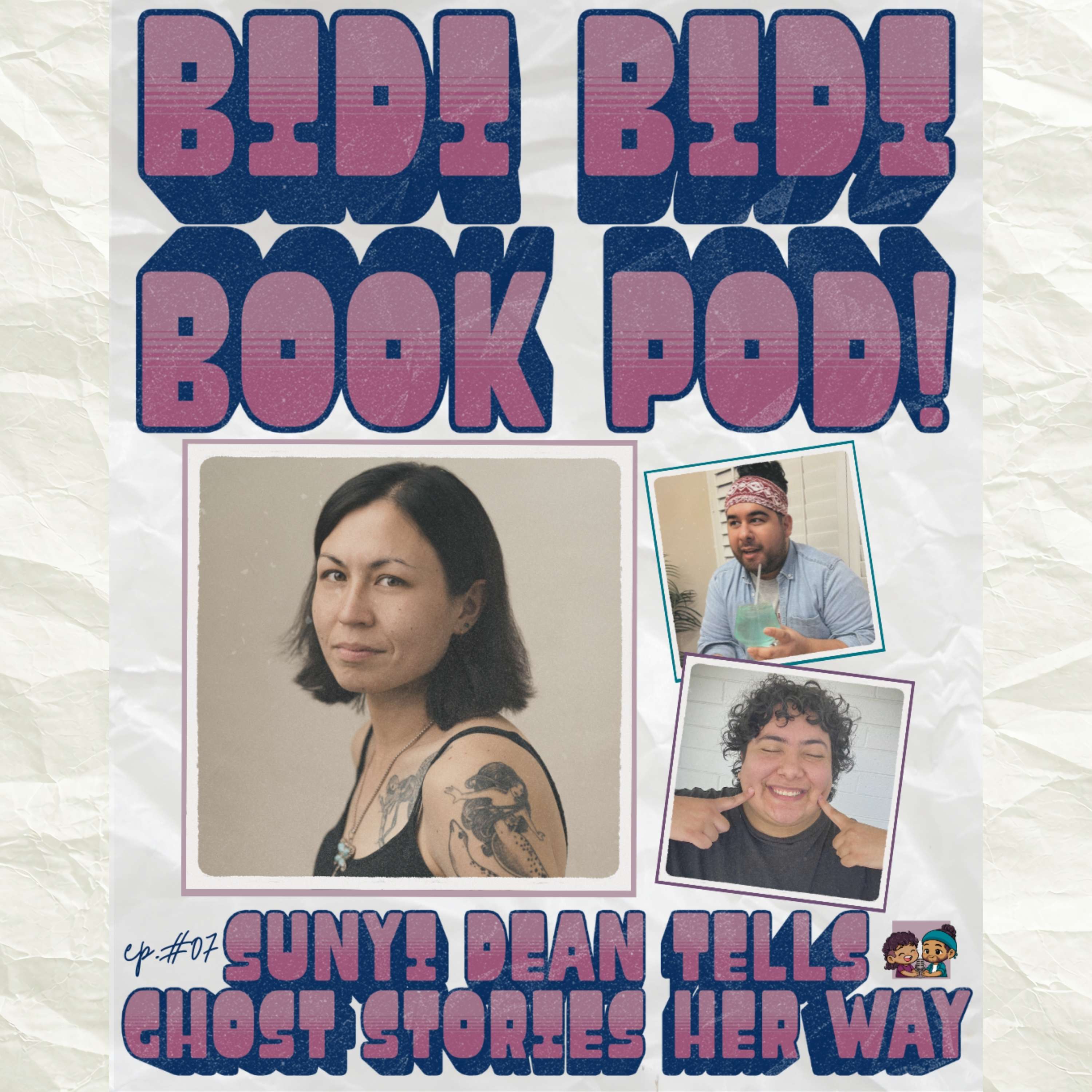
Leave a Reply