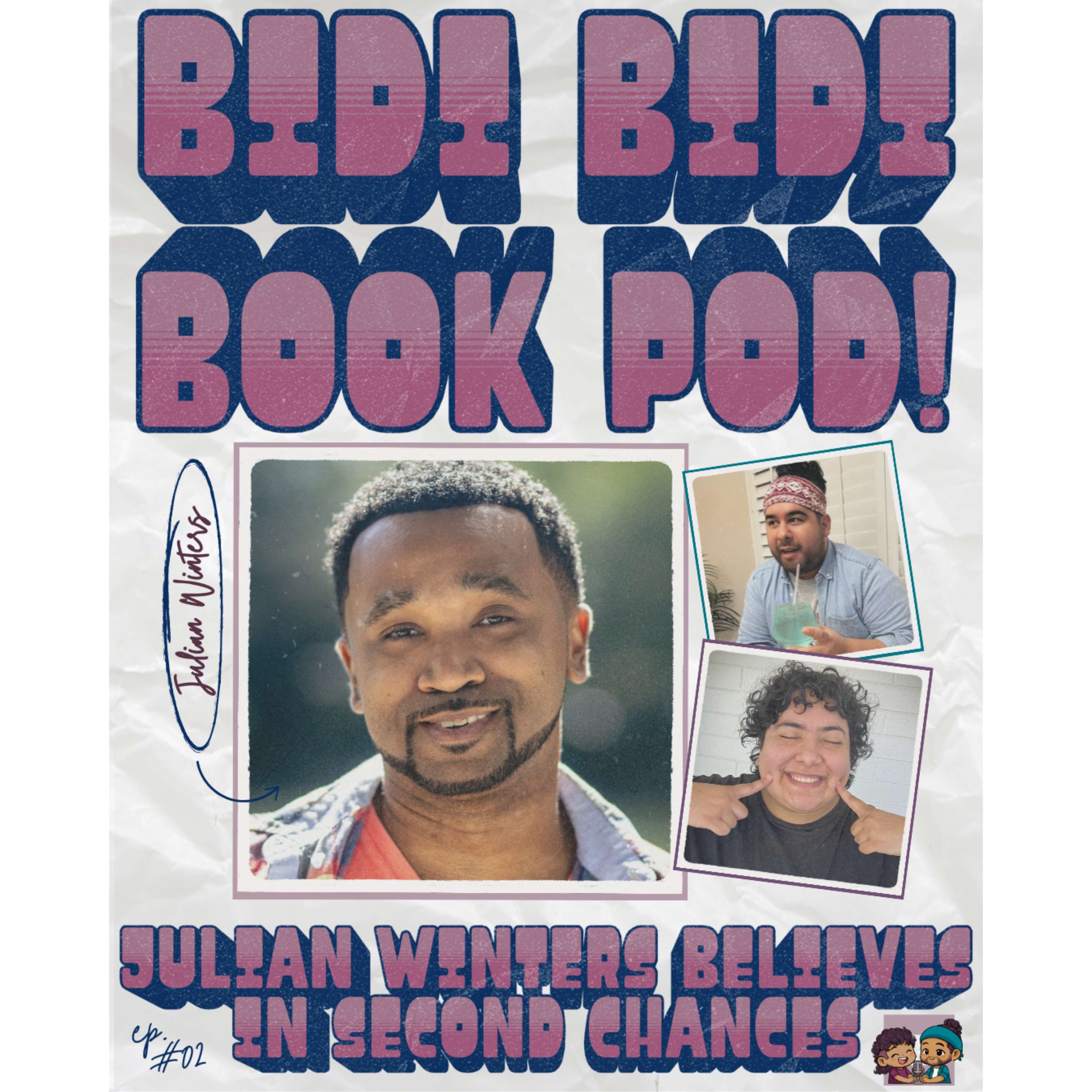
The “second chances” PR team is here to preach!
We talked about Achillean romance, surviving in the publishing industry, representation, and the importance of going to bat for marginalized communities, especially if you read or write about them.
You can access Julian’s secret extra question on our Patreon
Links mentioned:
Transcript
Alright. If I start talking in the accent, it’ll probably be after the intro because I feel like… or should I do?
Jonny:Before I was like, I would think it’d be easier to do it when you have the words in front of you, but maybe not. Maybe you’re better ad libbing. Whatever happens, happens. Yeah.
Soni:All right.
Jonny:Hello and welcome to the Bitty Bitty Book Pod, a bookish podcast committed to celebrating queer and trans BIPOC stories and storytellers and and sharing our experiences within the publishing industry and what it is to exist as a queer trans BIPOC creative today.
novels and romances including:Soni:And my name is Sonora Reyes, best selling and award winning author of the Lesbiana’s Guide to Catholic School, the Luis Ortega Survival Club, the Broposal, The Golden Boys Guide to Bipolar and the forthcoming (redacted) and together we are so excited to spend some time with you, with friends and in community to chat, chismear, and make that TBR pile bigger and more diverse.
Today we are joined by Julian Winters, award winning young adult and adult romance author whose newest release Last First Kiss just came out on January 27th.
Today we talked about achilean romance, surviving in the publishing industry, representation and the importance of going to bat for marginalized communities, especially if you read or write about them.
Jonny:And tropes! But before we bring Julian in, let’s start with a platica, a moment to catch up between just Soni and I and with y’ all and bring you into our lives a little bit as authors and what we’re working on and maybe overshare a little bit. So, Soni, stop laughing. What’s going on with you? What are you working on?
Soni:I know that was. I’m sorry. It was my idea to make Jonny go and tropes!
Jonny:I said it so enthusiastically. Broadway Call me.
Soni:Get. Get Jonny and Oscar.
Jonny:Put me on Wicked or something.
Soni:Yes. Okay. So catching up. I am taking a break today. Well, sort of. I’m.
I’m doing logistical things that are author related things that are not writing.
So I’m like reading a book that I can’t talk about yet because I’m blurbing it and I am writing up like interview stuff and yeah, trying to be nice to myself.
Someone told me yesterday that I’ve been being really hard on myself and that made me really sad because I actually have been trying really hard to be nice to myself lately. So it’s kind of a wake up call.
I was like, oh, if somebody else is noticing that I’m being hard on myself, like, I’m not being as nice to myself as I thought. So that’s something I want to work on more of, like, just being really nice to myself because I’m going through it. So. Yeah. What about you?
Jonny:on. But one of my, like, new:They do cookbooks.
And one of the people that I met way back a few months ago, actually maybe last, like, fully last year, sent me a few cookbooks, like, sometime last year also.
tle bit of a cookbook girl in:One is like a vegan Turkish cookbook, another is like, Chinese Made Easy, and another one is, like, last minute dinner party. So, yeah, so I’m going to be looking through those and trying to plan, like, what I want to try for, like, January. What.
What am I going to try to cook? Because I love to cook, and so it’s gonna be really fun. And, yeah, we’ll see if I have a little cookbook collection come the end of the year.
Soni:Yay. That sounds so fun. I love it when other people cook, so that’s great. I’m great at eating other people’s cooking and eating at restaurants.
Jonny:Love a restaurant. Love.
Soni:Yay.
Jonny:Incredible.
Soni:All right, so Julian has asked me to do an accent. Oh, that was, like, bad.
Jonny:It was real, like, cockney. I actually.
Soni:I don’t know. I don’t know what accent’s gonna come out. Julian said to do the accent. I’m doing whatever. I’m trying my best. Okay. I’m just.
We’re all doing our best, but we’re so thrilled to have you, Julian, for the chance to chat.
Jonny:Oh, yeah, I went more posh.
Soni:I don’t know. It changes. Anyways, thanks for joining us.
Juian:I’m not gonna survive. Thank you so much for having me.
Jonny:Oh, my God. Okay. This is great. First of all, one, Thank you for being our. You’re gonna be our very first guest on our podcast. So that’s.
Juian:Shut the Front door.
Jonny:Iconic. Iconic. I don’t think we could have asked for a better guest. And
Juian:we’ll see about that.
Jonny:No, I.
But yes, we brought you because we have to celebrate your new release. And so can you tell us a little bit about Last First Kiss?
And for any listeners out there who may be, for whatever reason, meeting you for the very first time today, a little bit about yourself?
Juian:Yeah, sure. Last First Kiss is a second chance, slow burn Adult romance about a wedding planner.
Well, he’s an event planner who is assigned the biggest wedding of his career, only to find out that the man of honor is actually his first kiss from 10 years ago and someone who recently broke his heart. It is a love story about falling in love and finding yourself, but also finding the love of your life.
A little bit about me. I am an award winning author. I have Last First Kiss is my eighth published book, which is wild to think about.
I have never thought I would make it to eight books, but I’ve published six young adult contemporary novels and Last First Kiss is my second adult contemporary romance. I don’t know if there’s much else that you need to know about me other than I really, really, really love you two.
Soni:We love you too.
Jonny:I am personally so excited for Last First Kiss. Like I was reading, I think they love you. And I was just like, wait, this character is. And that character. And I was like connecting the dots.
Like I knew they were interconnected and I was like, oh, I can’t wait to see. Like, let me run into who these characters are going to be. And I was, I was like, oh my God, this is going to be so good. And yeah, I, I can’t wait.
Soni:I also cannot wait. Just for the listeners, we’re actually filming this before it comes out. So like we might say stuff like can’t wait for it to come out.
It’s because, you know, we’re,
Jonny:we’re back in time.
Soni:But it is out!
Juian:We’re speaking to you from the past. Into the future.
Jonny:Yeah, I’m sure I will have loved it at this point.
Soni:Yes, it’s so good. By the time this comes out, you can, you can have it. You can go to the store and buy it. But. But yeah, I was going to say pre order it.
No, you could buy it.
Jonny:No,
Soni:you’re gonna have it
Jonny:order it. Order it.
Soni:Yeah, you can touch it with your hands. You can listen to it. Sorry, that was weird. Okay.
So Julian, we did an Instagram live about a year ago for before both of our last releases in the adult romance space. And I remember really, really liking what you had to say about Second Chance Romance, which can be a pretty controversial trope.
And your debut adult romance, I think they love you is also a Second Chance romance. What makes for you a good Second chance romance?
Juian:Okay, so this is. And I know Second Chance romance gets a really bad rap. Readers, I get it.
I have read some that I’ve also been like, ooh, I really don’t want these two to get back together.
And I think that is the key to a really great Second chance romance is to get the reader to really get behind two characters enough that they deserve that second chance. So it can’t be, oh, they broke up because one is a dog person, One’s a cat person. Like, that’s not.
Like, that’s not gonna really, like, I need to be fully invested into their backstory enough to want to read a Second chance romance. So for me, it is that backstory. I was a writer who hated flashbacks. Oh, my gosh. Why are we going back there? Can we not?
And now I’m obsessed with the way storytelling can be done with flashbacks and to really.
Especially with Second Chance romance and getting you to invest into those characters and their love story and, you know, kind of seeing who they were versus who they are now.
Because I think that’s the key right there, is for a Second Chance romance to work, you have to convince me that this person has evolved or these two people have evolved, and they are now the two people that they need to be to be together, versus in the past, where they were two people who wanted to be together, but they didn’t have the tools that they needed to be a great, you know, couple.
Soni:Yes, exactly. Because it has to be, like, a. Like a good reason to break up, but not an unforgivable one, you know?
Juian:Exactly.
Soni:Because I think that is, for me, too, the problem with, like, how the execution is, like, if. If I can’t forgive these characters for what they did to each other, like, I don’t want them to end up together, you know?
So, yeah, I. I really, really do love a good, like, Second Chance romance that actually, like, makes me heartbroken for their past. And then I’m like, oh, they. They can do it now, you know?
Juian:Yes. Drag me through the mud.
Jonny:Yeah.
Juian:Make me feel so bad about this breakup.
Soni:Yeah. Yeah, exactly.
Jonny:Yeah.
And I think, like, as someone who also really loves, like, friends to lovers romances, like, I see a lot of similarities in there as, like, really loving this person who either, you know, kind of intimately or maybe, like, at best, like, is the person who knows you best and it’s like, let’s take that. But what if we also, like, ruin their lives five years ago? Like, what if.
What if we have this same sort of foundation, but, like, the stress is actually completely different because they still know all those ways in which they know each other so intimately, but then there’s also those small ways in which they’ve changed within the last however many years since they’ve known each other in that way. And it’s like, oh, shit like, this is. This is stressing me out. And I. I can’t wait to, like, read more of this. I. I need to be stressed out even more.
And, yeah, like, I. And so that. That really, like, propels me to be like, yeah, no, Second Chance Romance is worth it. Whenever. I mean, like. Like any good trope.
Like, whenever it’s written well, it’s written well. And, yeah, I stand behind that.
Soni:Yeah. Jonny, Soni, and Julian on the Second Chance Romance PR team. But, yeah, no, like, it’s. It’s that perfect mix of, like, yearning and angst and like it’s so good.
Juian:Yes. I think it really, really lends itself really well to queerness. Also.
I think Second Chance and queer love stories work so well together because you think about it, you know, being, you know, being a queer person.
We don’t get to have that same timeline everyone else does when it comes to, you know, learning how to do relationships, learning how to communicate, learning all these different things. It feels like it starts all over for us once we get to a certain point. And then it’s just coming into your queerness.
And I don’t mean that as, you know, like, in the past, they were together, but they were in the closet, and now in the future, they’re out. It doesn’t. It’s not about the coming out process.
It’s about you growing into your queerness and loving who you are enough that you can share this part of you with someone else later on in life. And I don’t think that comes immediate for a lot of people.
So I think that works really well with Second Chance where it’s like, I needed to learn and discover who I was in order to be the person that I can be with you in a relationship. And so that’s why a Second Chance queer romance, I will just, like, fall over for one of those.
Jonny:Yeah.
And I mean, and I think it’s just so relatable, like, who is the exact same person that they were their junior year of college or, like, even at, like, 20 before, like, your. Whatever the front of your brain is called fully develops like
Soni:Frontal lobe
Jonny:that thing, like, yeah.
And so it’s like, we did such a natural and realistic thing that people go through and. And like, don’t. Don’t talk shit on it or else will come for you.
Soni:Yeah. The Second Chance romance PR team is watching.
Jonny:But I think, like, holistically speaking, what is your favorite thing about romance as a genre and, like, what entices you? What about it? Like, do you just love as a author and as a reader?
Juian:Oh, gosh, for me, what do I love? I love that with romance there is. And I think you can get it also, like, through reading young adult novels. But it’s.
By the end, I know I’m going to have some sense of hope. And, you know, it may not be a happily forever. It may be just be happy for now, but I know by the end I’m going to feel hope.
And in this shitty world that we’re currently living in, that we’ve been living in, I need that from, you know, a romance or, and I think I always need it.
Even as a kid, you know, growing up, you know, knowing I was queer, knowing, you know, being black, you know, all these different things where, you know immediately you have strikes against you in the world.
Reading romance kind of reminded me that there are also so many joyful parts of this existence, so many hopeful things, so many things to look forward to. And that’s why I gravitate to romance. I feel like as a writer, uh.
I want to give that back to readers. So that’s why I gravitate writing romance is because even if I’m having a terrible moment in my life, I can give someone else that reminder that we get to go on and we get to experience all these wonderful things. And there is someone out there for us.
Whether it is a romantic love or a platonic love, there is someone out there for us that is going to help us through these difficult moments and through these periods in our life where we’re unsure who we are, where we’re going, you know, what’s next. So that’s why I gravitated for both. Because that hope, I need it so bad.
Soni:Yeah, I totally agree. Man, you made me think of, like, three new questions as you were saying that.
Juian:I hope that’s a good thing!
Soni:No, yeah, it is.
But, yeah, I. I will try to keep to, like, what I had already planned. But if I, you know, I might. But so speaking of, like, hope and, like, you know, holding on through, like, oh, sorry, I hit my mic.
ishing for a while now, since:Juian:That is such a great question as I experienced that just last month. No, I think for me, what keeps me going or what keeps me hopeful, honestly, is seeing, you know, that by me doing it.
Since I’ve been out, since:Soni:Yeah, you are. Like, a lot is because of you. Like, there’s no one person who, like, you know, makes everything happen.
But, you know, like, even like, when I was starting out, like, you know, Julian Winters is, like, definitely one of the, like, to me at least, like, inspirations, powerhouses, like, in my mind, you know.
Juian:Thank you.
Jonny:And has remained so.
Soni:Yes, like, still. Yeah.
Juian:You’re both so lovely. I can’t lift over, you know, I’m not a powerhouse. But no, like, for me, that, that is what keeps me going.
It’s like I’m going to keep writing because if anything, that’s me holding the door open for more people to come in. And I grew up not having these stories.
I’m sure you two had that same experience where we went to school and the books that we were given, you know, through middle school and high school and like, we weren’t the main character and we weren’t featured on the cover and we didn’t get to be, you know, you know, that person who someone falls in love with. We weren’t desired, you know. So for me, getting that now is healing something for me.
But I also want to make sure, like, another generation doesn’t come up and have to wait until they get into, you know, their late 20s and their 30s and their 40s and so on to know that they deserve that main character energy and they deserve to have someone desire them or fall for them or they deserve to have supportive systems. They deserve all those things. So that’s what keeps me going. Whether publishing is going to say yes to another Julian Winters book, I don’t know.
But I’m going to fight for it so that I know I can keep, keep holding that door open so more people can come in.
Soni:Uh, please. Oh, my God. Ahh! It’s so I, I, I’m just like you publishers, if you’re listening, by Julian’s next book.
Juian:Please, please. My ideas are not all bad, I promise.
Soni:No. Oh, my God.
And like, all three of us actually started out with, like, the YA space young adult, and now we’ve all kind of branched into the adult romance genre, and we all had different young adult and adult publishers.
So I thought it would be really cool if we have, like, a little conversation about, like, what have we noticed the differences in both, like, reader reception and what is seen as, like, normal from publishers in the young adult versus the adult spaces.
Juian:Where are we starting with it then?
Soni:Let’s start with, like, reader reception from YA to adult, and then we’ll go with, like, publisher expectations and publishing norms and stuff.
Juian:It’s. It’s very interesting because I love the young adult space so much, but I often don’t get to hear from the target audience of that age category.
Like, it’s not like a bunch of high schoolers or, like, hitting me up on Instagram or, like, knocking me over, like, at a coffee shop saying, oh, my gosh, I love your work. We don’t often get to hear from the people we actually write for.
I do hear from a lot of adults in the young adult space, whether that is teachers, librarians, educators, or adults who are still reading young adult like, I do. And so, like, the reader reception is always kind of weird because I do, you know, get those notes.
Like, a teacher will forward me a note from their students that they read their. They read your book and they, you know, this is the first time they seen this and the first time they felt that. And that’s always so great.
Soni:Oh, it’s so special.
Juian:It’s so special. It makes me cry every time. I hate it. I’m like. I’m like, yes, keep sending me notes.
But also, please, like, put it in all caps in the email subject line. You will cry. That’s. That’s great. That’s always such a, you know, fulfilling experience. With writing adult, I get the immediate response, like, I get it right from the, you know, the people I write for. So that’s always such an interesting contrast because it’s like, in your face, like, right then and there. Oh, my gosh, I love this. I love this.
I love this. You know, this I wasn’t such a fan of. And it’s like, oh, okay. Wow. All right. Thank you. So it’s a lot to take, but it’s also a lot of fun.
It reminds me, you know, writing for don’t reminds me, like, being on AO3 again. It’s like, as soon as I hit post on my fic, all of a sudden I get all the comments.
Soni:Yeah, yeah.
Juian:So it’s interesting. I do Love it, though. I do love that adults who read my YA are like, yes, finally, a Julian Winters, you know, adult book.
I get to read the spicy scenes or whatever. That’s fun. But yeah, it is. It is interesting because I’m sure you two have experienced this also.
We have this barrier for us with the readers when it comes to young adult where we aren’t. It’s not as accessible to get, you know, whether or not we’re having that impact.
And we’ll hear it from the people who are giving them the books, but we don’t always hear it from them.
Soni:Right, right.
Yeah. I feel like I’ve experienced a similar thing with, like, with young adult.
Most of the time, the only time I will hear from, like, actual, like, you know, young readers, like teenagers, high school students, is if I’m doing a book event and they’ve come to the book event and then they can, you know, I can sign their book and everything. And that’s always really, really special too.
And I, I do really, really love those moments and kind of like seeing the impact in person. With adult, it is like you said, it’s so much faster and it’s so. It’s like instant gratification. But also, I’ve noticed adult readers are a lot harsher.
Juian:Oh my gosh. Like, like, not for me. In a heartbeat.
Soni:Yeah, but. And it’s like, that’s fine. Like, I, you know, reader spaces are reader spaces. If you tag me into it, I’ll see it. That’s what I’ll say.
So if you tag me in a post, I will, I will look at it. I will see it if you tag me. But yeah, for. It’s interesting to see, like, the, the difference of, like, I feel like.
And maybe it’s because, you know, we know that young adult books are mostly written for teenagers, whereas adult books are written for adults.
And so I think maybe some readers have like, that in their head of, like, when they’re talking about young adult books of, like, I know this isn’t for me. But also, we do know that there are a lot of people who are like, I didn’t like this because these children are acting immature.
And I’m like, you know, have you ever been a teenager? Like, have you ever been in that? And that. Anyways, that’s a whole other conversation.
Juian:They came out fully formed. They were never actual teens.
Soni:Yeah.
Jonny:I, I think, like, I, I completely agree with, like, where we interact most with, like, the actual teenagers that we write YA for, but I would even, like, maybe even more specifically say, like, book festivals is where, like, I’m going to see a teenager because most like a random Tuesday book launch event, like high schoolers got homework to do and maybe have to like ask their mom to take them to like the bookstore. Like these things aren’t necessarily as accessible for a 16, 17, 18 year old as they are for an adult.
And so that’s, I think why I love book festivals so much is my, that’s like really the opportunity where we get to see like those teenagers and like, see like the people that we actually imagine whenever we’re writing these books for and like seeing, holding these books and hopefully being moved by them.
And I think that that’s also like a like turning point for me with writing adult too, because I didn’t necessarily have to think about like, how is this reader going to be moved by like, like this adult idea that I have?
How are they going to be like morally transformed and uplifted through like this idea of, I don’t know, two like baseball players banging it out for 300 pages. Like there’s, I think like less of an sort of like thoughtfulness implication when writing adult.
Which maybe like was the reason why I, I really enjoyed and loved writing like Futbolista, but like I, I, and also I was incredibly scared of like putting it into the adult space because it’s like, oh, I know that real romance community, like knows what they want, are very vocal about what they want, and will tell you about what they want and what they don’t want. And I was like, that’s, that’s gonna be a lot. Like, I, I need to like gird my loins. I need to prepare this.
But it really has been an incredible thing to be able to talk to adults about like writing adult and new adult and you know, getting to have these conversations that maybe like would be a little bit risque for like if there was like actual teenagers in the audiences and stuff like that too. And that’s been really fun to like not have to like watch your mouth so much.
But yeah, I, I think that like, even if like I’m not necessarily writing from some like, moral impactfulness when I write new adult or adult, there is still that really great thing about like seeing especially like queer BIPOC, queer Latine people like reading these books and engaging with them.
Like, you know, the, the bookstagram people that like connect with you because like this is the first book that they’ve read by you because they read primarily adult and now they’re reading the YA books or like the book clubs even like in Austin they have like the Little gay bookshop book club.
And like, it’s really great to like, hang out with them and like a shout out like Jay from like, whose books who’s like, also just really great at like, promoting like love stories, by BIPOC and like getting to talk to like, adults about these sort of things, like whenever they’re. They’re for them.
It’s like, yeah, like, I wrote this book specifically for you and it’s so great to be able to like, navigate and converse, whether it’s like at the bookstore or like at a bar or like all of these sort of things like that. That’s been a really great thing to put my foot in now. And I’m like, yeah, like, how can I engage in both? I really want to like, do both now. This is.
I’m. I’m going to figure out how to do both.
Soni:What about, like, on the publishing side of stuff, like, have y’ all noticed, like a big difference in, I know we’ve all had different publishers in YA and adults, so I wanted to like, kind of see like, if is there a correlation or like, you know, how is the YA treatment expectations, support all of that? How is that different from in adult? And. And is there a correlation? Let’s see.
Juian:For me, it is, it’s, it’s very different. I will say it’s very different.
And I’m, you know, not sure if like all the behind the scenes and, you know, where everyone stands and whatnot, but I get a lot more open communication on the adult side, you know, from every corner of it. I love both my YA and my adult editors. They’re super wonderful, super great. But I feel like on the adult side.
But I also hear from the marketing team quite a bit. I also hear from my publicists a lot. I hear from like, different people a lot. It’s a lot of open communication. Hey, this is when this is happening.
This is when this is going on. Are you interested in this? So that for me has been super helpful, super great. I know YA is and continues to be super saturated.
And so they’re, you know, a lot of those publishers acquire a bunch of authors and I sometimes don’t know if there’s enough hands to reach out to as many authors as they acquire on that side, where as adult, you know, your romance is huge and there’s prolific authors on that side.
But I do feel like maybe they have more resources to be able to communicate and have, you know, those kind of conversations with individual authors, which is such a wonderful thing. So that for me is great. Yeah, that’s the difference.
Soni:Yeah, I’ve, I’ve noticed the same exact thing is like I, I do love my you know, YA and adult teams, but in my adult publisher, like I feel like I’ve had a lot more communication, a lot more like updates regarding like, you know, not just from my editor but from like everybody, you know, I, I know my publicists, I know like the whole like team, you know, and, and well, I, maybe I don’t know the whole team but I know multiple people who like are in contact. But yeah, just like it’s on the YA side I think. And, and maybe it’s adult too.
Like everybody’s super burned out, I’m sensing and I feel like super overworked.
Everybody’s really, you know, there, there so many of the, at least in my publisher, like a lot of the imprints have like just shuttered and so I think people are like doing like four people’s jobs. Like one person is doing like so many people’s jobs.
And I don’t know that that’s a YA thing or if it’s just like a what’s happening right now in publishing thing. But yeah, so that’s, that’s something I’ve noticed as well.
Jonny:I always enjoy hearing these because I, my, my adult publisher is like typically not an adult publisher and so I really can’t speak on like the, those differences. I think more so just like the differences of like being in a big five versus a mid sized publisher versus like a publisher like levine querido.
And, and I, yeah, I, I think that like there, there definitely have been differences and I feel like with a, a smaller publisher like I’ve been able to see that sort of like intimacy and like having the whole team around, you know, I’ve gotten to know like everyone from like who’s in charge of LQ all the way down to like who the intern is. I don’t necessarily get that with like being at a big five publisher and I think like the ways in which maybe they even like spend their money.
I feel like when I was at a big five publisher it sort of felt to me like here’s the easy way of like providing for authors. We give you like money for a book tour and like go spend it however you want and like yay, that’s great.
Versus like a smaller publisher, smaller publisher who’s like we’re going to spend that money on getting you to book conferences and conventions and we’ll send you to like book festivals rather than, rather than that sort of thing which I have now realized, at least for me is a much better way to spend money because book tours don’t necessarily bring in anyone new. It’s sort of like a celebration of who was already going to read and celebrate your work.
As much as I did love having a book tour being mostly paid for. That was really nice. I’m not going to say that wasn’t but I do think like priorities sort of shift based on size of publishers and things like that.
But yeah, I, I am interested to see like being at hopefully a, a actual like romance imprint or something like that. How what that looks like, how they sort of interact with their authors while also getting to stay with lq. Hopefully they will.
I’m very hopeful that they’ll be putting out my next YA novel. So like getting to engage in different imprints will be very interesting.
Juian:Yeah, a great thing you just brought up.
I don’t mean to like derail it which is, you know, I started my career with a small indie publisher and the difference that a lot of people don’t get to hear about, talk about in you know, how a publisher spends this money with a small imprint. Like, like you said Jonny I. They were very focused on, hey, there’s this book festival. We are going to be represented there at that festival.
We want you to go there. And they, you know, there was a big thing I was with through them is the only time I’ve been to ALA.
I got to go to ALA mid winter, I got to go to bookcon in its original form.
A lot of different festivals because they were so, you know, festival and conference driven like you said, with big publishers the dollars might be you know, allocated to, oh, we’re going to send you for this tour stop or we’re going to throw this money behind like ads and different things, you know, on social media and whatnot.
And so you don’t get that, that real face to face interaction like you said, other than readers who are already going to show up for you because they love your work.
Jonny:Yeah.
And I wonder if it’s maybe because smaller imprints and publishers see that value and like creating relationships with like, especially booksellers, you know, like yeah, like I, I went to like the, the mountains and plains booksellers and like the past couple of years but it’s mainly because it was in San Antonio where I live.
But like LQ sent me to Denver for like Winter Institute and that’s the first time I’ve ever gone to like an ABA thing and at the same time like they were doing as much front facing stuff as they could too.
Like, I showed up to Winter Institute and had all these booksellers talking about how my assistant editor shout out Irene, like, went up on stage for this, like, editor thing and, like, talked about Fulbolista to hundreds of booksellers. And so they all knew exactly who I was. They were.
Now we can cuss, so I’m gonna assume we can say this too, but, like, they all knew me based on Irene saying, if you want a book where they come on his chest, like, Futbolista, and apparently the way that these booksellers ran to that pile of books.
Soni:Oh my God.
Jonny:Like, yeah, of arcs.
And so, yeah, I, I think that they really see the value and, like, really pushing not only us, but themselves and their brand and thus, like, the whole plethora of who they have and who they represent as authors versus, like a larger publisher who’s like, obviously, you know me, because everyone knows me. And.
Yeah, and I think too, like, I remember when I was first getting published, you know, we’re all sort of, I think, shoot for, like, please, Macmillan, Penguin, anyone? Like one of those, like, pick us up. And my agent, Claire Draper saying, like, hey, we have, like, we have someone who wants your book.
They seem really great. And like, remember, like, Adam Silvera started at a small imprint. Like, there’s always the next book.
Like, just because you start somewhere small does not mean that you’re going to be small by any means. And I think that was a really great lesson for me to learn pretty immediately.
And it still ended up being a pretty great process getting that book published. Like, I didn’t necessarily need a huge publisher to make my book stand out or be good.
Juian:You just need, you need a team that loves what you’ve done.
Jonny:Yeah, yeah.
Juian:Like, I 100% will take that passion behind a project that I presented over, you know, making it splashy or, you know, you know, I, I would love to walk into Times Square and see my face on the board, but I would also love to go into every meeting with my publisher where they are just foaming at the mouth for updates. Like, yeah, that’s very helpful in the long run to you being a creative.
Soni:Yeah, that’s something I do really like about my adult publisher I’m with forever at Hachette.
It’s an imprint of Hachette and they have like, a prioritized reader program where, like, if you share an identity with the, like, characters in the book or that the book is about, then you have, like, priority on, like, who gets the arcs. So I think that is just so cool because obviously, like, we want people who our. Who our books are like, written for to. To see them first, of course.
And. And that’s not that our books aren’t written for people who.
Who can’t necessarily relate to the specific experience, but that the people who can relate, we want them to. To definitely see it. So I really like that they have that thing as well.
Juian:I need to sign up for that, Forever, hit me up.
Soni:Go, go. Look at that. I think they just posted about it on. On threads, if anyone wants to check that out.
Jonny:Yeah, shout out that. Love that. We also would like to take some time to talk to you about romance and like, romance and representation in particular.
And just to start on, like, a positive note with it. Like, I.
And I think we’ve maybe like, touched on this a little bit, but what’s been for you, like a really great or positive or moving thing that you’ve observed within the romance space, Whether that’s with readers or maybe less likely, but also possible, like, within publishing.
Juian:Yeah, with. Gosh. Positive things that have happened. It’s been a lot of great things. Been very fortunate to on the romance side.
And this is something we could have talked about a little bit earlier in that, like, festivals for like, romance and adult romance. You as the author get to pitch yourself and you get to like, get there.
I feel like on the, you know, the children’s space, a lot of those festivals feel like they’re invite only. So it’s like, you know, they go through your publisher and, you know, your publisher pitches certain authors and whatnot.
So it’s a little harder to get to certain festivals if, you know, you’re not picked or you’re not invited to. Well, with, you know, for the romance that I’ve been able to go to a lot of different festivals because I get to say, hey, I wrote this book.
It’s about this. I’d love to come to your festival. And a positive thing of going to those festivals is the romance readers are voracious. They are feral.
You give them two, three tropes and they have snatched the book out of your hand. Like, they want to read and they want to read constantly.
Soni:And they know what they want to read.
Juian:And they know what they want. Yes, they know what they want. I love that so much. So that’s been such a positive thing is going to those festivals and seeing how hungry they are.
The minute you say, oh, it’s fake getting. Give me the book! And I’m like, okay.
You don’t even know what the plot is, you know, like that has been so wonderful because it is nice to go into spaces where people love what you love and they want to be a part of it in any way shape possible. So that’s been super positive.
It’s also been positive going to those different festivals and interacting with the other romance authors who are so you know supportive so like into you know what everyone’s doing. And it does feel like while it doesn’t look that way on the surface right now, I think romance, adult literature, period, has long ways to go.
That in terms of diversity and representation that YA has been, you know, spearheading for a long time now. I still feel like in that space I get to, you know, I. They have a festival here in Atlanta called the Black. Is it the Black Romance Book Festival?
Yeah, Black Romance Book Festival. And I got to participate in that last summer and they booked the whole thing out. Like there were hundreds upon hundreds.
Like we were stacked on top of each other. So many people showing up for that.
Which is great for me because if I just go into, you know, a Barnes and Noble and look at the table display, I might find two or three, you know, BIPOC authors on that table. But when we go to these particular romance festivals, there are hundreds and hundreds of readers and you know, that space.
So that’s been like really positive and uplifting to not feel like, oh, I’m one of five. Because that’s, that’s not a great feeling.
Soni:Yeah, that’s exactly how I felt with Steamy lit because they also prioritize, you know, marginalized authors.
Juian:Yeah shout out to Steamy lit and Mel and Cookie and everyone behind that team, they’re amazing.
Jonny:Shout out Steamy Lit.
Soni:Yeah, that was amazing actually like an extra shout out because like when I went I had like an unexpected thing come up where like I needed a wheelchair unexpectedly. Like I am ambulatory wheelchair user, but I usually know ahead of time if I’m gonna need it. I didn’t think I was going to.
And they were very helpful with that, the accommodations and everything like that. So I was, I was very grateful about that. With Steamy Lit.
Jonny:Yeah.
And I think to jump off what you said, Julian, like romance is a community and a genre that is becoming more diverse and like welcoming that diversity I think every day. But it is still pretty palm colored, like just, you know, observationally.
So whenever you were jumping into adult romance, did that at all like inform your thinking when you decided to make that leap?
Like whether knowing you were going to be adding to it and that was like a positive or like you said before that you would be joining a very small club of, like, Black romance authors and BIPOC romance authors and maybe that sort of hesitancy and like, especially so, like, writing for and centering queer, gay Black adults. Like what. What sort of informed your. Your thinking, your hopes, your fears as you made that leap?
Juian:My fears were, oh, gosh, they were so, so big because it’s hard when you don’t see it out there, that kind of, you know, representation, or you see it, but you don’t see it in large quantities. And so the fear is always, oh, no, am I going to be just that one that the reader glosses over?
Because they see, you know, two people of color on the cover of the book and say, not for me. Not even giving the story a chance. You know, it’s. It still has all those things that you love. It still has all those tropes and everything.
So that was a big fear for me.
But a lot of the hope was that, again, I get to enter in a space where I know there are readers who want this, I know there are readers who need this, and I’m hoping that I get to be one of the people that gives it to them. So that’s always the one that kind of wins out over the fear of, oh, no, I’m not gonna be featured here. I’m not gonna be loved here.
Because inherently, you know, as soon as you add anyone, like I said, who does not match the palm color complexion, it becomes an issue of, oh, am I going to relate? Or, oh, am I going to, you know, be able to get into this story, which, hi, everyone. Yes, you can.
I promise you, if it’s well written, it’s. It’s really good. So that was. That. That was. I definitely did worry about it. I still worry about that.
I still worry about, you know, whether or not a project of mine will be acquired by a publisher or by someone because they’ll look at, you know, what’s in the space and not what’s missing in the space.
Soni:Right. It’s like, if people can relate to, like, you know, Fae and, you know, elves and stuff, like, we can. We can also. We can also. You know what I mean?
Like, we can. We can relate to BIPOC stories as well. Well, like, it.
Juian:I promise you, if you can get into it, you can get into our stories.
Soni:You don’t have to be the same, like. Yeah. You don’t have to be the same, like, person that is represented in order to, like, find something good in it. We’ve been doing this our whole lives.
Like, having to see only, like, straight, white stories. And like, we enjoyed them as kids. Right. Like, for the most part. So, like, you could do it too, if you’re.
Juian:Exactly.
Soni:This is like, to the like, straight white people. Like, you can do it too. I promise you are capable.
Jonny:No, literally. Yeah. You know, if I could feel an emotional investment in Stoop kid from Hey, Arnold, you can feel an emotional investment to any of these BIPOC gay romance characters. I promise you.
Soni:Yes.
Juian:And you know what? You might just walk away feeling even better after you’re reading one of those stories.
Soni:If it’s a Julian Winters story, you definitely will.
Jonny:So.
Most important question I think of today, Julian, is how do we come to a peaceful consensus over the very loud, very opinionated conversations about who gets to, or who should be allowed to write certain stories about certain demographics? Oh, I’m just kidding. We don’t have to talk about that.
Juian:Oh, I mean, listen, I.
Soni:I’m just kidding. Unless.
Jonny:Unless.
Juian:I. You know what? I do have a thought, because this has been a conversation behind closed doors that I’ve been having over and over and over and over again.
And this is part of my feeling is if you, the writer, feel the need to enter into a space and write a story from outside of your lived experience. I wanted to say ask, but I’m demanding.
I’m demanding that when you do that, you be as loud and obnoxious about that community’s rights, about the things that are happening to that community, about all the things that they find joyful, but also the things that they are being oppressed because of. That is my biggest issue is when these. When people write outside of their identity, go for it. Do it. Do it respectfully, do it without harm.
Do it, you know, as authentic as you can, but do not do it just to collect a check when that community’s under attack, when that community is, you know, not given access to certain things, you need to be at the front of the line speaking up for that community. And that’s what I don’t see. I see a lot of people going in and they’re writing these stories and, oh, we should be able to write about this.
And we should be able to write about this too. And this. This makes me feel this way. And as soon as something happens to that community. Crickets.
Soni:Right.
Juian:You say nothing.
Soni:And it’s. Especially when they have, like, a platform. Like, you really could use that platform of people who, you know, like this type of story.
Juian:Yes.
Soni:To be like, hey, do you want more of these? Let’s, let’s like, do something. Let’s like protest, let’s go and make some kind of difference.
Like you have this access to all of your audience to make any kind of difference for the community that you are representing. Yeah, I love that. I think that’s so important.
Juian:Yeah. And you sure as hell better be recommending other authors who are writing inside their own identity in that community as well.
That just drives me up the wall. It’s like, oh, yeah, I wrote this wonderful, you know, this meets that story.
And you never once mentioned the people from inside that community who are also writing those stories.
Soni:Yeah, yeah.
Juian:What?
Soni:Like, if you’re going to take up space in that community, like, you have to be in community. Right. With everyone there who’s part of it already, you know? Yeah. I think that’s so important.
Jonny:Wake that up. Yeah. Oh, my God. Yeah.
And I think, like, sort of a basic notion that we should be grasping onto is that we should be, while supporting any author that you want to support out there with your wallet, also supporting queer men, queer amab people, queer trans men, queer mask people, queer BIPOC men who are writing Achillean romances. And again, that’s not saying that or equal to that we shouldn’t be supporting anyone else, but perhaps, like, what else would you say to that?
To anyone out there listening right now whose first reaction to that statement might just be why?
Juian:Why?
I. I mean, honestly, I don’t know if you get to have the stories that you want from the people writing outside of that without the existence of those, that actual, you know, group of people. You can’t just mine communities for little gold nuggets to, to put into your stories or into the books that you love to read and not actually uplift that.
Because after a while, it’s, it’s, it’s, it’s. With anything, you’re going to run out of the gold. You’re going to run out of diamonds.
You’re gonna run out of these different things that you get to use from that community. And because you didn’t uplift, you didn’t support them, they’ve been erased. They’ve, you know, been, you know, neglected and whatnot. Then what?
So that’s why. That’s why. And also because those people are also telling authentically great stories.
You know, I’m sorry if you had a bad experience with maybe one story, but that, that’s not, you know, we’re not a monolith. You don’t get to write off entire communities because of one experience or, you know, whatever the case may be.
Soni:Yeah, that’s a problem with like, you know, with like straight white authors. If, if you read a bad book by a straight white author, you’re not going to be like, I’m never going to read another straight white book again.
Like, there’s, there’s just so many of them and nobody. I have never heard anyone say that.
Juian:Never, never!
Soni:But I do hear it all the time when it comes to, you know, queer and trans BIPOC stories.
It’s like, oh, well, I didn’t like this. So like, I’m just not going to read any more, you know, of, of this demographic and. Because those are not for me.
And it’s like, well, why do you have infinite chances for, for these stories but not for our stories, you know?
Juian:Or why do you give infinite chances to someone writing about our stories and not us writing about our own lived experience?
Soni:Yeah, it’s like if all of your recommendations for, you know, like, Achillean Romance are, you know, not people who openly identify with the experience, then because like, and there’s also that conversation about like, okay, of course, like, it’s.
Nobody’s entitled to know your identity, but if you’re not open about having that identity, like, if you’re not out as like, you know, a queer man or even just like a queer person, then people are like you, you’re not entitled to people assuming that you’re queer. You know what I mean? So you have to, you know, there is privilege that comes with not being out. And I feel like.
Sorry, I’m going on a tangent a little bit, but yeah, it’s so. It’s like if, if you, all of your recommendations are just people who aren’t out, then that’s, that’s maybe a problem.
Like, we need to celebrate the, the stories coming from, you know, inside the house.
Juian:And then the other thing is, like you were saying also when we curate these lists and whatnot, don’t let it be oh, queer, mm stories. And there is not a single, you know, book with a person of color. There’s not a single trans story.
There’s not a single like, story with someone with disability or neurodivergence. Like, different, different body types. Like, it need, we need to see the full range, the full scope.
Don’t let it be just the same, you know, rock hard abs. At least one of the characters is white and fucking gorgeous.
Like, I need, I need the whole, you know, I need to, I need to know that, okay, you’re not just behind a certain kind of queerness. I need you to be behind all of it.
Soni:Yes. And I will ask all of the readers who consume, you know, queer stories who, just look at your tbr, just look at it.
Like maybe don’t even take any action yet. Just look at it and notice what’s there, what stories are represented and what’s not. You know, like noticing it is the first step.
And, and try your best not to get defensive about it. If you’re seeing only palm colored books, right? Don’t get defensive, just notice it.
Just notice it and be like, okay, well this is something that is worth paying attention to. You know? Just acknowledge it.
Jonny:I love that. And to sort of like start closing out this conversation.
A common sentiment about non men wanting to engage in Achillean romance is that they’re able to read stories where they can can separate themselves from the misogyny that would quote unquote otherwise be present in MF stories.
However, the, the fact does remain that like misogyny does exist in gay romances and queer romances that center to men like whether they deal with sports or coming out or femme presenting characters, with bears even like misogyny is not an easily escapable part of the world when writing contemporary romance. Even if it’s not women who are, are at the receiving end of it.
But instead of like having any kind of conversation about frustrations about that sentiment, unless you want to Julian, then we can. But instead of that, we, I, I would like to get your thoughts on the beauty and the power that is seeing queer men being able to flourish and find love even while living in a world, albeit fictional, that is still built on misogyny and strict gender roles.
Juian:Yeah, it’s. I think trying to remove every bad and negative aspect of this world is never going to work in the fiction. I don’t care if it’s high fantasy.
It’s never going to work. It’s never going to connect with the reader. I do find that I love. I mean, hi, I, you know, not just as a queer person, as a black person.
I do enjoy picking up a story where I don’t have to think if I turn this page and something racist happens, I swear to God.
Soni:Right.
Juian:Like it’s, I get the escapism. I get that, you know, that feeling of oh gosh, yeah, I would just for like three hours. Not like I have to deal with this aspect of my life.
It’s, that’s why I find the joy in being able to read, you know, stories featuring queer men, especially queer men that are not always the same archetype because I didn’t get to move through this world in a certain way because I, you know, have certain qualities. To me, there’s like, oh, immediately clocked him. He’s gay. And so it’s nice to find the joy.
And like, oh, this side of me doesn’t have to be all negative. There’s great parts to it. There’s things that I need. I need to celebrate. I need to stop being, you know, so, you know, harsh on myself.
And I need, you know, to get rid of those biases where it’s like, oh, no, you know, the character shouldn’t be like this because that immediately means this is going to happen. No, let’s celebrate that. Celebrate our uniqueness, and who we are. So that, for me, has been great.
I, you know, the world is not perfect, but finding those small moments is always such a joy.
Soni:Yes. I love that. And speaking of celebrating. Right. Who are your favorite Achillean romance authors? That.
And for anyone who doesn’t know, Achillean is kind of like that umbrella of, like, you know, men loving men. Yeah. It’s like the equivalent of, like, you know, on one side of Sapphic. On the other side is Achillean. Right.
So who are your favorites that our listeners should look out for?
Juian:Yeah. So.
Jonny:Soni and I have decided to make this question a Patreon exclusive, but also not at all exclusive. It will be available for all our patrons whether or not you subscribe at a paid level.
So be sure to find us on Patreon for all of Julian’s recs, plus some recommendations from Soni and me, including purchase links from our bookshop.org page. Okay, back to the episode.
I think just kind of following through on that question. We are going to be doing a lightning round for all of our guests.
The. The lightning round can be at, like, a BIPOC pace. It’s fine. We’re kind of. We’re totally okay with that. Whatever happens, happens.
But got a few quote unquote lightning round questions, and the first one is your favorite and least favorite trope in your genre.
Juian:Oh, gosh. My favorite trope is fake dating 100%. My least favorite. I’m warming up to it. Is the amnesia trope.
Jonny:Oh. Okay.
Soni:It’s a hard one to get right, I think.
Juian:It’s a hard one to get right. So that’s why I. That’s. I’m the. I’m the second chance of the amnesia trope. I’ve been burned before, and so now I’m just like, no
Soni:the second chance.
Jonny:I feel like. I feel like fan fiction has kind of been carrying that trope, like, historically. No? Yeah
Juian:Yeah, yeah.
Jonny:Love that for fan fiction, your favorite beat or story moment in romance.
Juian:Oh, oh, oh. It’s either the first kiss. That is such a big one for me. First kisses. Or it’s the.
I like to call it the falling in love montage where everything is fine and everything is wonderful and for once I’m not like, either tensing up or on the verge of tears. So falling in love.
Soni:Ah, love is real. Yeah.
Juian:Yes.
Jonny:Yeah. That’s what we’ll call it the love is a real beat.
Juian:Yes.
Jonny:What are you currently reading or what is on your tbr?
Juian:Oh, what am I currently reading? There’s a lot of books on my tbr, so don’t ask about that.
I am currently reading Dearly Departed by Chip Pons, which is a contemporary you know Hades love story. So I’m reading that. I feel like I’m reading something else, but I’m forgetting. We’ll just go with that.
Jonny:Cool. And in your opinion, what is the best book in the Julian Winters catalog? And which of your books do you think you wish or which.
Which of your books do you wish more people knew about?
Juian:Oh, my gosh.
Jonny:I know. We’re making you pick between your children.
Soni:You have to choose.
Jonny:I’m not taking credit. Soni wrote this, so I’m. I will not be taking credit for this.
Soni:No. Make them fight.
Juian:You know what. And that is so you though that is so you. Um, favorite. You know what I am going to say. My. It’s hard. Gosh.
My current favorite is my next YA Find my way down to you because it was me as an author finally confronting the one topic I did not want to write about because I didn’t want to have to deal with the emotional fall out of it. But it’s about grief. So that is my current favorite because I got through it.
And then the one I wish people knew about more or read more is a book called the Summer of Everything. I have never had so much fun writing a book in my entire career. I think it is so funny.
And I think it, you know, it does a lot of different things that I wanted to do and why that I hadn’t with other books. So.
Jonny:And I love the Summer of Everything. So let’s. Let’s.
Soni:An iconic story.
Jonny:Yeah. Go. Go get it from your library or from your favorite indie bookstore or from our bookshop.org page.
Soni:Yes. Okay. So I want us to also do something with all of our guests is a manifest our biggest like pie in the sky author dream. So this is something, the rules are you cannot be humble. Like, whatever the first thing that comes to your mind, multiply it. Like, it has to be big. You cannot think small here.
Like, don’t say, oh, I want to be a New York Times bestseller. No, it has to be big. Okay.
Juian:I have to be bigger than that?
Soni:Yeah. Yes. Think big.
Juian:Okay.
Soni:Think of what. Think of what New York number one New York Times bestseller Julian Winters sees as his pie in the sky dream.
Juian:Oh, gosh, my pie in the sky dream, then. New York Times bestselling author.
Because that is the big dream for me right now, is that multiple of my books are selling well enough that I am able to purchase a wonderful oceanfront property where I can invite my friends out and we can do writing retreats, we can hang out, we can just escape from the world. That, for me is huge because I feel like anytime I’m in a writer space, we are all going through so much and we have no break from it.
So that would be my dream, is that I am able to give back that way to. I feel like I give back a lot to readers. I’d love to give back to the writing community.
Soni:I love that.
Jonny:That’s such a good one.
Juian:That’s a great. Such a huge selling author that I get to create a space for us.
Soni:Yes. Oh, I love that. Please hit me up once you have that. I want to go. Excellent. Okay, so. Last. Last question before we.
We’re gonna have, like, one more question that’s just for our patrons, but before we get there. And depending on how, like, spicy we get in this conversation, this one might have to be cut. Or we could make it just for our patrons.
There are tiers to how. How much this could get, but I love mess, and I really, really want to know.
Jonny:Obviously.
Soni:I need to know. You’re like, biggest, biggest, juiciest. Like, we’ll do what we have to do. Okay, like, what is your, like, biggest, juiciest piece of chisme?
Like, any beef, any unpopular opinions, hot takes, you have your most problematic trait, your biggest red flag. Whatever it is, just. Just give me some mess. And again, we can bleep stuff out. We can, we can. We can take it out if we have to.
Juian:My gosh. Okay, I. My. I gotta be cautious, so I’m gonna go with my biggest red flag. And this is for my fellow authors.
It could be for some readers with, like, bigger platforms.
It is when you go into an online space continuously to call out authors or fellow authors or to call out books or certain things that you feel are problematic or done wrong or said in bad faith, and you use that to create your own following or you use that to add at the end. But buy my book because it has XYZ great representation. Or it does this, this and that. That is a huge red flag for me. That is.
I auto- immediately they go into the Julian Winters nemesis pile. I cannot, I cannot. Like, if you’re doing something that is going to be you know helpful and uplifting to a community and to fight for them, yes, 100%.
But if you only do this and you do this repetitively as a way to, you know, get your own likes and comments and followers, get people to purchase your book, that is huge for me. And I, I can, like, I legitimately will have private conversations where I just like go all the way off.
Soni:Wow. I never would have thought Julian Winters has nemeses.
Juian:Oh, yes, he does. He does.
Soni:Oh man.
Juian:Oh, I do. I do. I just.
Jonny:Let’s have The Book Community:Soni:Right. Like, there’s a difference between like every now and then, you know, like, you. We all have to plug our books. Right?
But if the only time that you’re like marketing your own book. And the only time that you’re like, it’s.
It’s like a pattern of like, okay, well, I’m gonna talk about this problem and then I’m gonna put my book at the end and I’m not gonna celebrate anyone else who’s doing this work. Just myself. That’s. Yeah. When it’s like that’s the pattern.
Jonny:Yeah. Then what is the good of your book?
Like, actually if you can only talk about it when you’re discussing something bad or terrible or knocking someone else down.
Soni:Yeah. And like, to be fair, some people maybe should be knocked down a little bit. But no.
Juian:Yeah.
Jonny:Yeah.
Soni:But yeah. Like, it’s. It’s definitely. Yeah.
Jonny:I think, I think I’m semi well known for like knocking down Tia Jeanine and American Dirt when talking about Ander and Santi. But like, there are plenty of other ways I love talking about Ander and Santi that do not talk about my. My favorite prima from Michoacan.
Soni:Oh my God. Yeah. Yeah, that. Let’s have a variety of. Of conversations about our books, like, and about other people’s books. Like.
Jonny:Yes.
Soni:You can’t have a one person community. Like.
Jonny:k about the books you love in:Soni:Who else is doing the work.
Jonny:Yeah, yeah.
Soni:Yay. Okay. Thank you so much, Julian. This was so fun.
Juian:This is. Oh, My gosh. So much fun. I felt like I was gonna, like we could have kept going. I was like, oh no.
Soni:I know.
Honestly, like that’s, that’s, I think gonna be the main problem with all these episodes is like, we just want to like, like talk so much because like there’s so much to say and it’s so fun to like have this. So hopefully we, you know, don’t have, you know, any three hour episodes, but we’ll see. But yeah. Thank you so much.
Last thing, if you want to like drop anything for the listeners, like any events that they can find you, any places to order your books, anything that you want our listeners to know before we go.
Juian:Yeah, I mean Last First Kiss is out now, so please order that from your indie bookstores or request it at your library because those institutions I need to continue to exist. They are the loudest about my books. They’re loudest, I feel like about a lot of BIPOC authors books. So get that there.
My next book is a YA, my first contemporary fantasy. It’s called Find My Way down to you. It is. You’ve reached Sam meets Hadestown light.
It’s a lot of mythology, a lot of sad boy moments in this romance. So I would love for you guys to pick that up. Comes out August 4th. And events.
I’m going to be at a couple of things that I can’t remember off the top of my head, but they’ll be announced soon. Couple festivals. They’ll be announced.
Soni:Keep an eye out on Julian’s page.
Juian:Keep an eye out. It’s, it’s, it’s. I. I know for certain it’s the West Coast. I’ll be in the Bay Area and I actually think I’ll leave. I’ll be in Texas also. So.
Jonny:What? Okay. Well, let me know.
Juian:I know I gotta figure out what that is. So just in case you’re at that festival. But yeah, readers just look out on my, my, my webpage julianwinters.com for event announcements. Yes.
Soni:Ah, so exciting.
Jonny:I mean at the time of this recording, I will have loved seeing you last weekend at Love Y’all Festival.
Soni:Yeah. Now I have fomo.
Juian:Yeah, I know, I know. We saw, we saw each other twice last year?
Soni:Yeah. I think.
Juian:At Love Y’all and then Steamy Lit.
Soni:Yes. I never, I get, I get. It’s all a blur of events.
Juian:Yeah, you, you were, you, you did a lot.
Soni:But it’s great. I love it. Keep inviting me, please.
Jonny:Incredible. Well check out where Julian will be at and also order all of his books. And yeah, we will be back in two weeks with our next episode of the Bitty Bitty Book Pod. And our special guest, Stephanie Valentine. Until next time.
Bye.
Soni:Yay.
Leave a Reply